24/7 Pest Control in the UAE

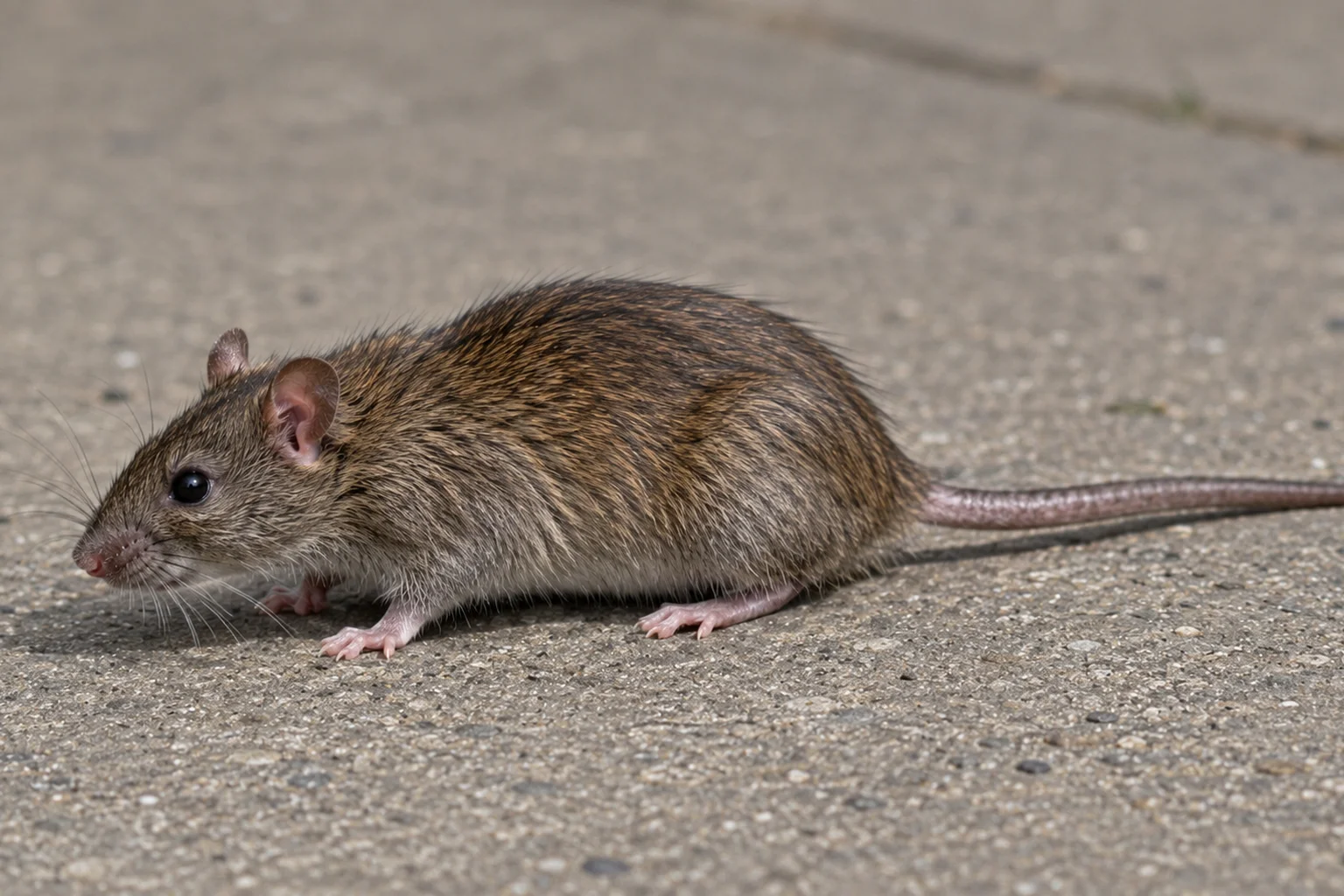
The Norway Rat (also called the brown or sewer rat) is the largest common rat in Dubai and a serious threat to both property and health. It burrows and favours ground level and below — drains, sewers, basements, garbage rooms, and the bases of buildings — and is strong enough to gnaw through soft concrete, pipework, and electrical cabling. It contaminates food and surfaces with droppings and urine and can transmit diseases including leptospirosis and salmonella. In Dubai's dense buildings and F&B districts, rats travel through shared drainage and service systems, so an infestation is rarely confined to one unit. DIY traps barely dent an established colony.
Santera's Dubai Municipality-certified technicians control Norway Rats with a full survey of burrows, runs, and entry points, followed by secured baiting and trapping and robust proofing of drains and structural gaps. For property managers and food businesses, we deliver documented, building-wide programmes with tamper-resistant stations aligned with HACCP and Dubai Municipality standards.
Get to know the physical signs and behavioral patterns associated with this species. Knowledge of these specific traits helps in maintaining a secure and pest-free environment.
Santera provides Pest control and prevention across Dubai, with primary service coverage in:

Santera gets rid of Norway Rats in Dubai with a Dubai Municipality-certified process: our technicians inspect to find the nests and entry points and entry points, apply targeted treatment that eliminates the problem at its source, and put prevention measures in place so it doesn't come back. For restaurants, hotels, and food businesses, all work follows HACCP protocols and Dubai Municipality standards.
You can try, but DIY rarely solves a Norway Rat problem in Dubai for good. Shop-bought sprays and home remedies tend to deal with what you can see while missing the nests and the gaps that let them in, so the problem returns. Lasting control means targeting the source — which is where professional treatment makes the difference.
Because the source survives. A female Norway Rat can produce 5–7 litters a year of around 7–10 young, which mature in roughly 3 months. Colonies grow quickly where food, water, and harbourage are available, and Dubai's warm climate supports year-round breeding, allowing drainage- and garbage-fed populations to expand rapidly. That's exactly why surface sprays and one-off DIY fail — they hit what's visible while the source keeps producing more, so lasting control has to target the source, not just the symptoms.
Watch for Norway Rats themselves and the signs they leave. Norway Rats are large, robust rodents with a body length of 20–25cm plus a thick tail shorter than the body. Norway Rats are powerful burrowers and ground-dwellers, nesting in burrows along foundations, in drains, sewers, basements, and rubbish areas. They are mainly nocturnal, neophobic (wary of new objects), and follow established runs along walls and pipes, often leaving greasy smear marks. Catching it early, before numbers build, makes treatment far easier.
Yes — Norway Rats can bite and are a serious health risk, spreading diseases such as leptospirosis and salmonella through droppings and urine, while gnawing wiring and pipes creates fire and flood hazards.
Norway Rats are omnivorous with a preference for high-protein and starchy foods — meat, fish, grains, and food waste. In Dubai they thrive on garbage, food storage areas, grease, and kitchen waste. They need regular access to water and hoard food, contaminating stores and surfaces well beyond what they actually eat. Cut off these food, water, and shelter sources and you remove what draws them in — but an established population still needs targeted treatment to clear fully.