24/7 Pest Control in the UAE

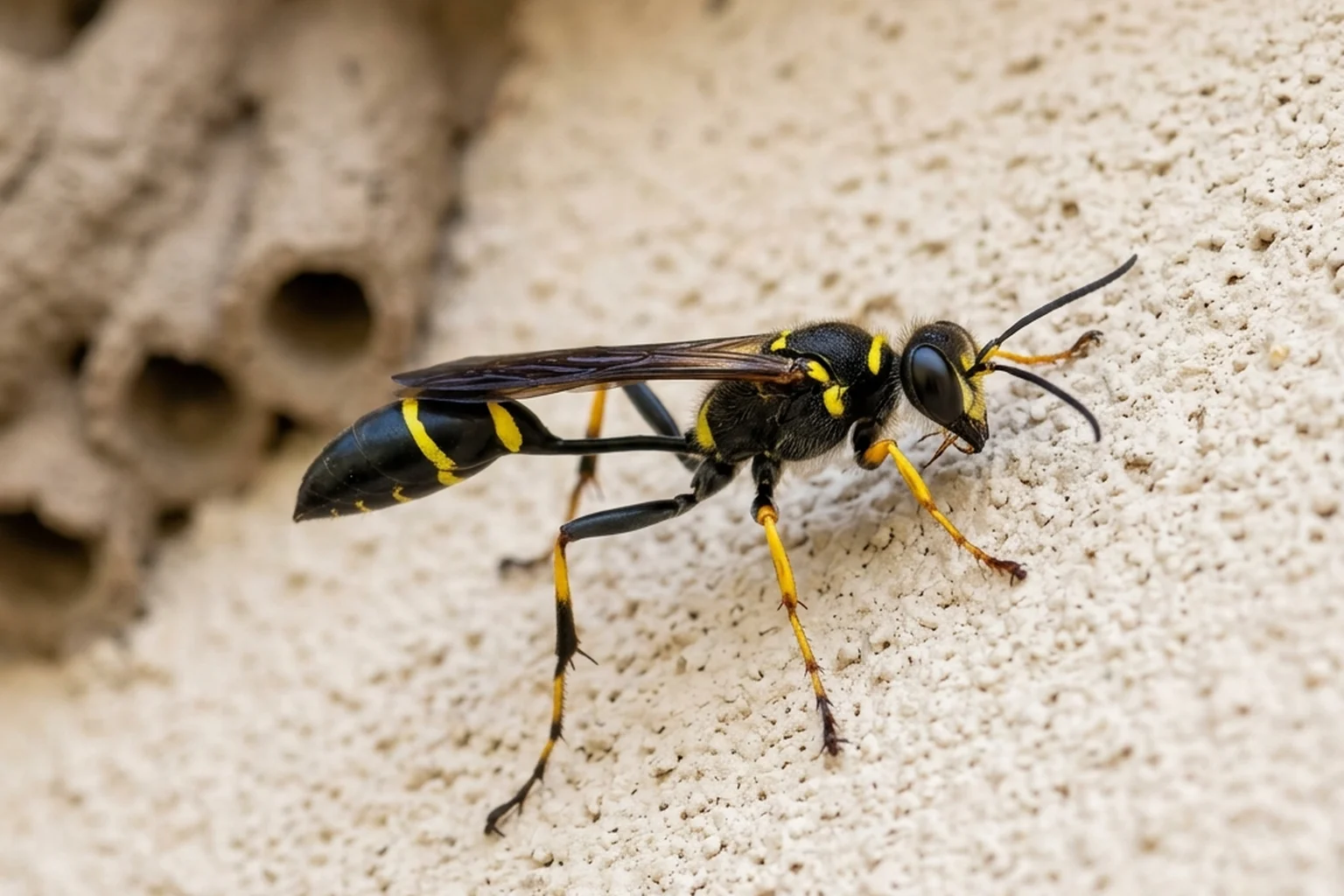
The Mud Dauber is a solitary wasp best known for the hard mud nests it constructs on walls, ceilings, eaves, and sheltered surfaces around Dubai buildings. Unlike social wasps and hornets, it doesn't form aggressive colonies and rarely stings — it isn't defending a communal nest — so the threat to people is low. The real issues are practical: the mud tubes are unsightly, stain and mark walls and surfaces, can block vents, louvres, and equipment, and the abandoned nests can attract other insects that reuse them. They provision their nests with paralysed spiders, so abundant mud daubers can also indicate a healthy spider population nearby. Knocking nests off without addressing why they're building leads to repeat nesting.
Santera's Dubai Municipality-certified technicians remove Mud Dauber nests cleanly, treat to discourage rebuilding, and advise on the conditions attracting them (including the spider prey that draws them). For villas, facilities, and commercial premises, we keep surfaces and equipment clear in line with Dubai Municipality standards.
Get to know the physical signs and behavioral patterns associated with this species. Knowledge of these specific traits helps in maintaining a secure and pest-free environment.
Santera provides Pest control and prevention across Dubai, with primary service coverage in:

Santera handles Mud Daubers in Dubai with a Dubai Municipality-certified, safety-first process: trained technicians locate and deal with the nest using proper equipment, then advise on prevention so the risk doesn't return. Given the danger, this should never be attempted yourself.
It isn't safe to deal with Mud Daubers yourself. Attempting to handle or remove them risks the nest, which is dangerous to disturb yourself, and DIY methods rarely resolve the underlying problem. The safe, effective route is trained professional response.
Because the source survives. Each female builds mud cells, lays an egg in each on a paralysed-spider food store, then seals them; larvae develop inside and emerge later. Being solitary, they don't build large colonies, but multiple females nesting on the same favourable surfaces can create clusters of nests over a season. That's exactly why surface sprays and one-off DIY fail — they hit what's visible while the source keeps producing more, so lasting control has to target the source, not just the symptoms.
Watch for Mud Daubers themselves and the signs they leave. Mud Daubers are slender wasps, about 20–30mm, often with a very long, thin thread-like waist connecting thorax and abdomen. Mud Daubers are solitary and non-territorial, with each female building and provisioning her own mud nest rather than defending a shared colony. They are active by day, calm around people, and seldom sting unless directly handled. Catching it early, before numbers build, makes treatment far easier.
Mud Daubers are solitary and rarely sting, so they pose little danger to people; their main impact is unsightly mud nests rather than any real threat.
Adult Mud Daubers feed on nectar and sugary substances. The females hunt and paralyse spiders, which they seal into the mud nest cells as live food for their developing larvae. In Dubai, areas with abundant spiders provide ample prey, so mud dauber activity can reflect nearby spider populations. Cut off these food, water, and shelter sources and you remove what draws them in — but an established population still needs targeted treatment to clear fully.