24/7 Pest Control in the UAE

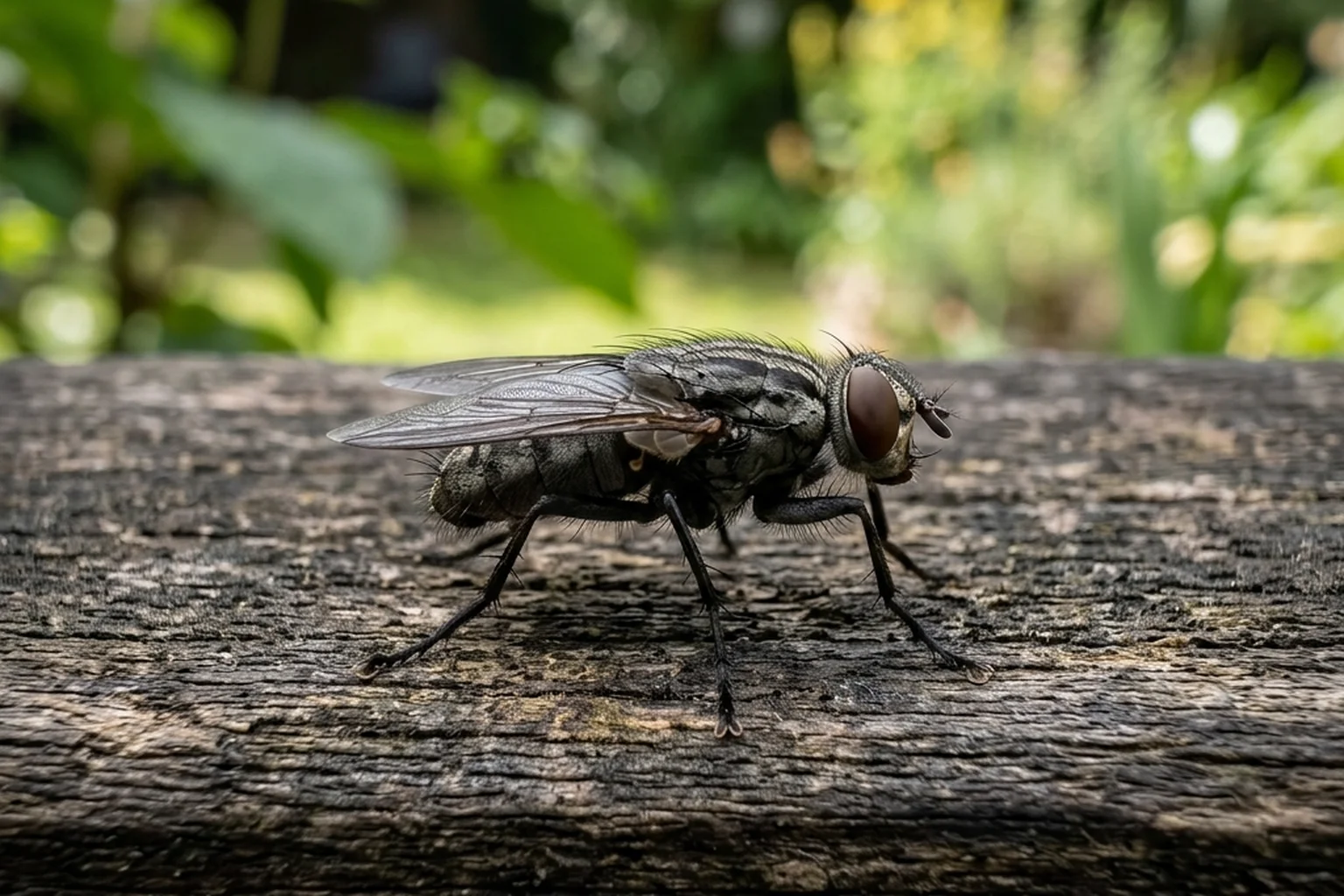
The Lesser House Fly is smaller and slimmer than the common house fly and has a distinctive habit of hovering in the middle of rooms, often beneath light fittings, in a jerky, angular flight pattern. It tends to stay indoors more than the house fly and is a familiar nuisance in Dubai homes, kitchens, and food areas. It breeds in moist, decaying organic matter — including damp food waste, organic sludge, and animal droppings — so a persistent indoor population usually signals a hidden breeding source such as a neglected bin, drain, or soiled area. Like other filth flies, it can carry bacteria onto food and surfaces.
Santera's Dubai Municipality-certified technicians control the Lesser House Fly by tracing and treating the breeding source, improving waste and moisture hygiene, and installing or servicing fly-control units alongside targeted treatment. For homes, kitchens, and F&B premises, we build the control into a documented fly-management programme aligned with HACCP and Dubai Municipality standards.
Get to know the physical signs and behavioral patterns associated with this species. Knowledge of these specific traits helps in maintaining a secure and pest-free environment.
Santera provides Pest control and prevention across Dubai, with primary service coverage in:

Santera gets rid of Lesser House Flies in Dubai with a Dubai Municipality-certified process: our technicians inspect to find the breeding source and entry points, apply targeted treatment that eliminates the problem at its source, and put prevention measures in place so it doesn't come back. For restaurants, hotels, and food businesses, all work follows HACCP protocols and Dubai Municipality standards.
You can try, but DIY rarely solves a Lesser House Fly problem in Dubai for good. Shop-bought sprays and home remedies tend to deal with what you can see while missing the breeding source in drains, waste, or decaying matter, so the problem returns. Lasting control means targeting the source — which is where professional treatment makes the difference.
Because the source survives. Females lay eggs in moist decaying organic matter and animal waste. Development to adulthood takes a little longer than the house fly but is still rapid in Dubai's warm conditions, allowing steady population build-up where suitable damp organic material is available. That's exactly why surface sprays and one-off DIY fail — they hit what's visible while the source keeps producing more, so lasting control has to target the source, not just the symptoms.
Watch for Lesser House Flies themselves and the signs they leave. The Lesser House Fly is smaller than the house fly, about 4–6mm, and more slender, with a duller grey-black body. The Lesser House Fly is mainly an indoor-dwelling species, with males characteristically hovering in mid-room beneath lights or fixtures. It is active by day, prefers cooler shaded conditions than the house fly, and stays close to breeding sources. Catching it early, before numbers build, makes treatment far easier.
Lesser House Flies don't bite, but they can carry bacteria onto food and surfaces, and their presence signals a hidden organic breeding source.
Lesser House Flies feed on decaying organic matter, liquids, and food residue. The larvae develop in moist, decomposing material including food waste, organic sludge, and animal droppings. Adults are less aggressive about landing on food than house flies but still visit waste and food sources, transferring contamination. Cut off these food, water, and shelter sources and you remove what draws them in — but an established population still needs targeted treatment to clear fully.