24/7 Pest Control in the UAE

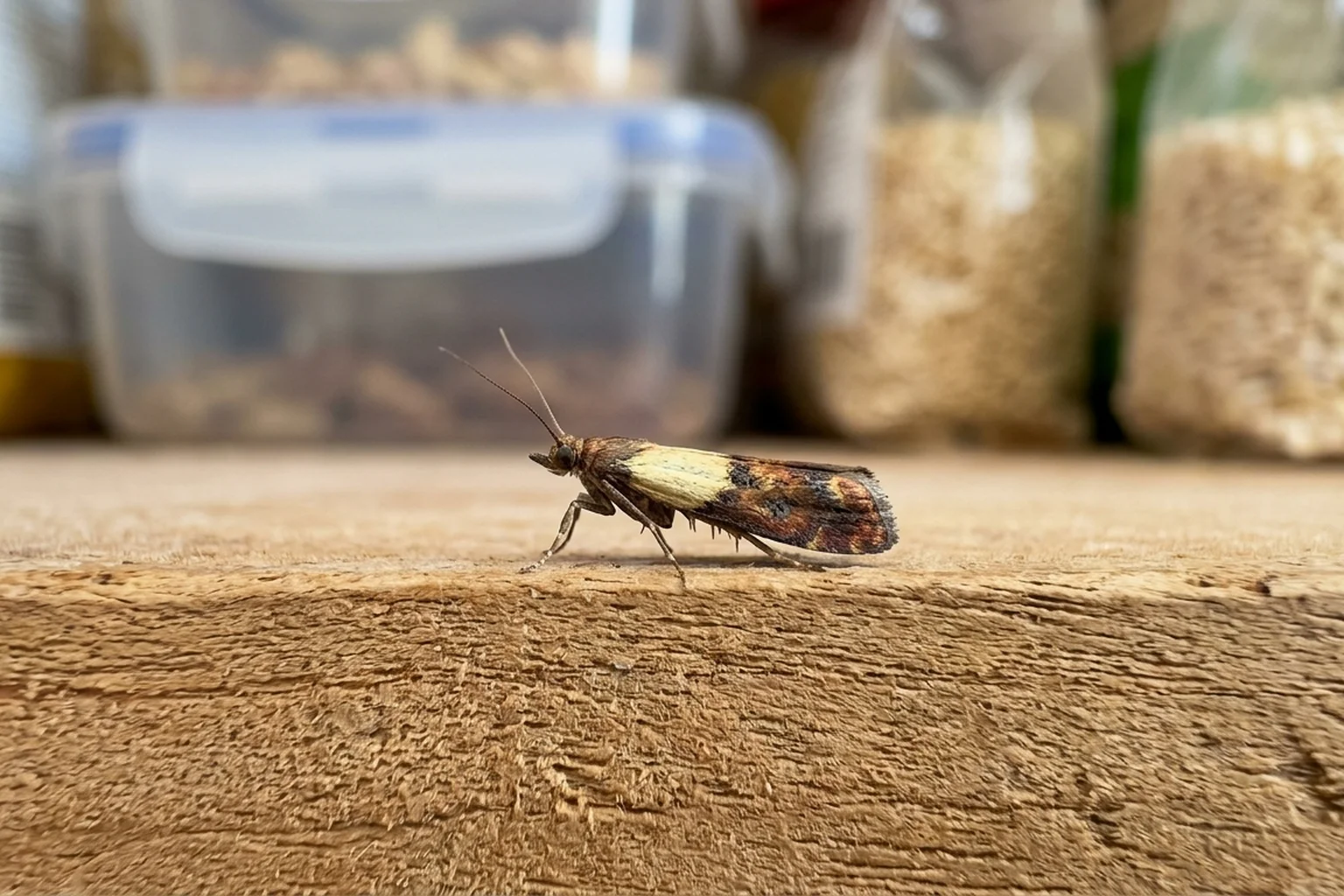
The Indian Meal Moth is the classic 'pantry moth' and the most common stored-food moth in Dubai homes, supermarkets, and food storage. The damage is done by the larvae (caterpillars), which feed on grains, flour, cereals, dried fruit, nuts, chocolate, pet food, and similar dry goods, spinning silken webbing through the product as they go. This webbing, along with droppings and shed skins, is the tell-tale sign — clumped, webbed food that's clearly contaminated. The adult moths, recognisable by their two-tone wings, flutter around kitchens and storerooms at dusk and lay eggs on or near food. Larvae can chew through some packaging to enter or leave products, spreading the infestation across a pantry or store. Cleaning the visible mess alone misses eggs and larvae hidden in other packets and crevices.
Santera's Dubai Municipality-certified technicians control Indian Meal Moths by identifying and removing infested stock, treating harbourage and crevices, deploying pheromone monitoring, and advising on storage hygiene. For supermarkets, F&B, and food storage, we integrate this into a documented stored-product pest programme aligned with HACCP and Dubai Municipality standards.
Get to know the physical signs and behavioral patterns associated with this species. Knowledge of these specific traits helps in maintaining a secure and pest-free environment.
Santera provides Pest control and prevention across Dubai, with primary service coverage in:

Santera gets rid of Indian Meal Moths in Dubai with a Dubai Municipality-certified process: our technicians inspect to find the infested stock and harbourage and entry points, apply targeted treatment that eliminates the problem at its source, and put prevention measures in place so it doesn't come back. For restaurants, hotels, and food businesses, all work follows HACCP protocols and Dubai Municipality standards.
You can try, but DIY rarely solves a Indian Meal Moth problem in Dubai for good. Shop-bought sprays and home remedies tend to deal with what you can see while missing the infested stock and hidden larvae in cracks and machinery, so the problem returns. Lasting control means targeting the source — which is where professional treatment makes the difference.
Because the source survives. Females lay eggs (up to several hundred) on or near suitable food; larvae hatch, feed and web through the product, then wander to pupate in crevices or where wall meets ceiling. The cycle completes in several weeks, faster in Dubai's warmth, allowing populations to build and recur if hidden eggs, larvae, and pupae remain. That's exactly why surface sprays and one-off DIY fail — they hit what's visible while the source keeps producing more, so lasting control has to target the source, not just the symptoms.
Watch for Indian Meal Moths themselves and the signs they leave. The adult Indian Meal Moth is small, with a wingspan of about 15–20mm, and has distinctive two-tone forewings — pale greyish-cream toward the base and coppery reddish-brown toward the tips. Adult Indian Meal Moths are most active at dusk and night, fluttering around storage and kitchen areas and resting on walls and ceilings by day. Larvae are mobile and often crawl away from the food source to pupate, appearing on walls, ceilings, and shelf edges — a characteristic sign. Catching it early, before numbers build, makes treatment far easier.
Indian Meal Moths don't bite or harm people, but their larvae contaminate stored foods with webbing and waste, ruining pantry and retail stock.
The larvae feed on a wide range of dried stored foods — grains, flour, cereals, dried fruit, nuts, seeds, chocolate, and pet food — spinning silk webbing through the product as they feed. Adults do not feed on stored food. In Dubai pantries, kitchens, and stores, almost any dry food product can host an infestation. Cut off these food, water, and shelter sources and you remove what draws them in — but an established population still needs targeted treatment to clear fully.