24/7 Pest Control in the UAE

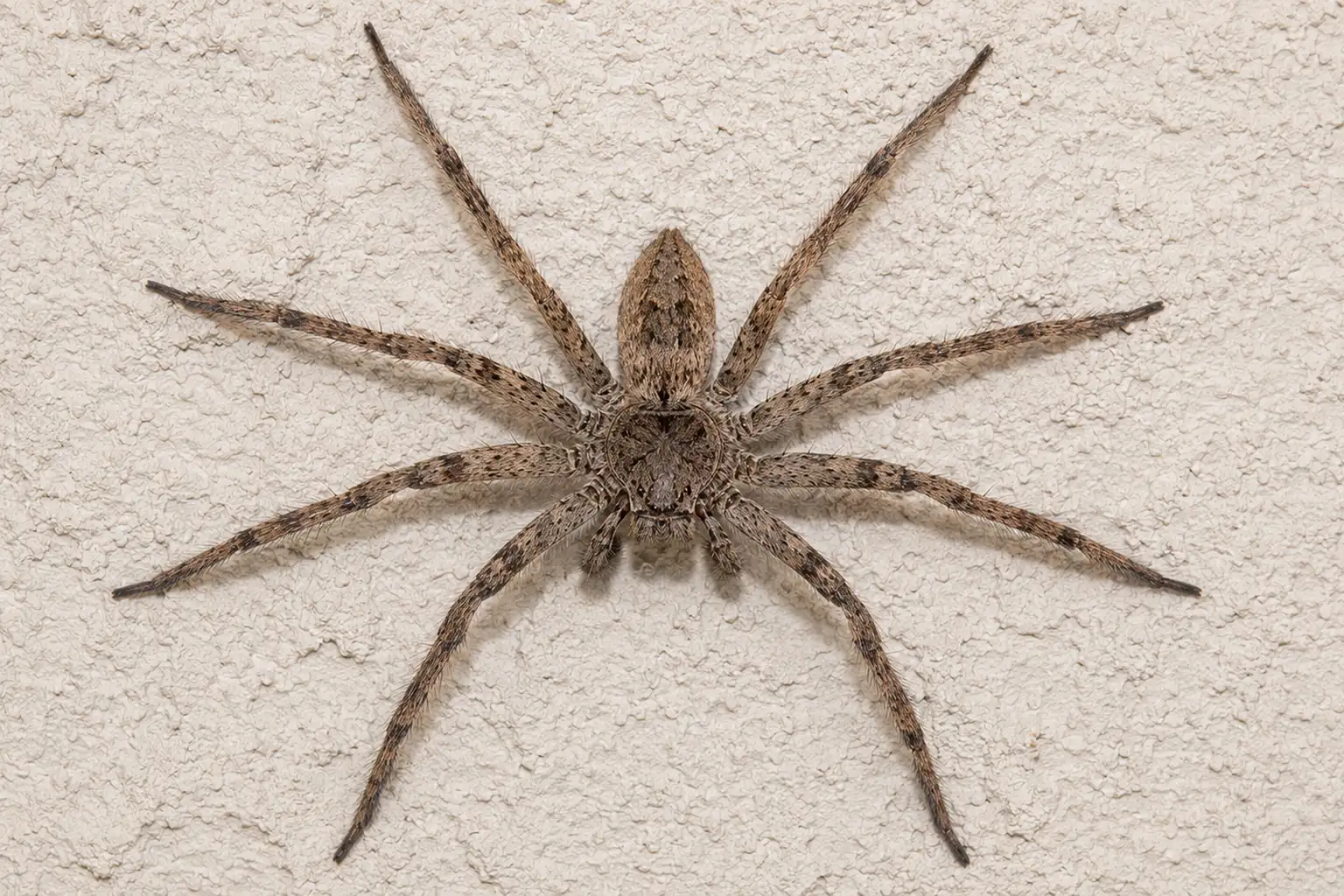
The Huntsman Spider is the cause of many a startled scream in Dubai homes — large, long-legged, fast, and prone to appearing abruptly on a wall or ceiling. But its fearsome reputation is undeserved: it has no medically significant venom, is not aggressive, and almost always tries to flee rather than confront people. A defensive bite (only if trapped or handled) causes minor local pain at most. Crucially, the huntsman is a beneficial predator: it doesn't build webs but actively hunts cockroaches, moths, and other insects, helping keep those pests in check. Its flattened body lets it squeeze into gaps and behind furniture, which is why it appears indoors. The real issue is fear and surprise, not danger.
Santera's Dubai Municipality-certified technicians manage Huntsman Spiders through removal, entry-point reduction, and — most effectively — controlling the insect prey (especially cockroaches) that draws them indoors, with accurate guidance to reassure occupants. For villas and facilities, we fold this into general pest management aligned with Dubai Municipality standards.
Get to know the physical signs and behavioral patterns associated with this species. Knowledge of these specific traits helps in maintaining a secure and pest-free environment.
Santera provides Pest control and prevention across Dubai, with primary service coverage in:

Santera gets rid of Huntsman Spiders in Dubai with a Dubai Municipality-certified process: our technicians inspect to find the harbourage and egg sacs and entry points, apply targeted treatment that eliminates the problem at its source, and put prevention measures in place so it doesn't come back.
You can try, but DIY rarely solves a Huntsman Spider problem in Dubai for good. Shop-bought sprays and home remedies tend to deal with what you can see while missing the egg sacs and harbourage that keep the population going, so the problem returns. Lasting control means targeting the source — which is where professional treatment makes the difference.
Because the source survives. Female Huntsman Spiders produce a flat, oval egg sac containing many eggs, which they guard, sometimes carrying or hiding it until the spiderlings emerge. They are solitary, so indoor sightings are typically individual spiders rather than infestations, though properties with abundant insect prey may host several. That's exactly why surface sprays and one-off DIY fail — they hit what's visible while the source keeps producing more, so lasting control has to target the source, not just the symptoms.
Watch for Huntsman Spiders themselves and the signs they leave. Huntsman Spiders are large, with a body of 2–3cm and a leg span that can reach 10–15cm, and a distinctively flattened body that lets them fit into narrow gaps. Huntsman Spiders are nocturnal, fast, and free-roaming, not building webs but hunting across walls, ceilings, and surfaces and hiding by day in crevices, behind furniture, and under bark or fittings. Their flattened bodies let them slip into tight spaces. Catching it early, before numbers build, makes treatment far easier.
No — despite their alarming size and speed, Huntsman Spiders aren't dangerous: they have no medically significant venom, flee from people, and actually hunt cockroaches and other pests.
Huntsman Spiders are active hunters that feed on insects and other invertebrates — notably cockroaches, moths, and other household pests — which they chase down rather than trap in webs. In Dubai, their presence indoors usually reflects available insect prey, and as cockroach predators they provide a degree of natural pest control. Cut off these food, water, and shelter sources and you remove what draws them in — but an established population still needs targeted treatment to clear fully.