24/7 Pest Control in the UAE

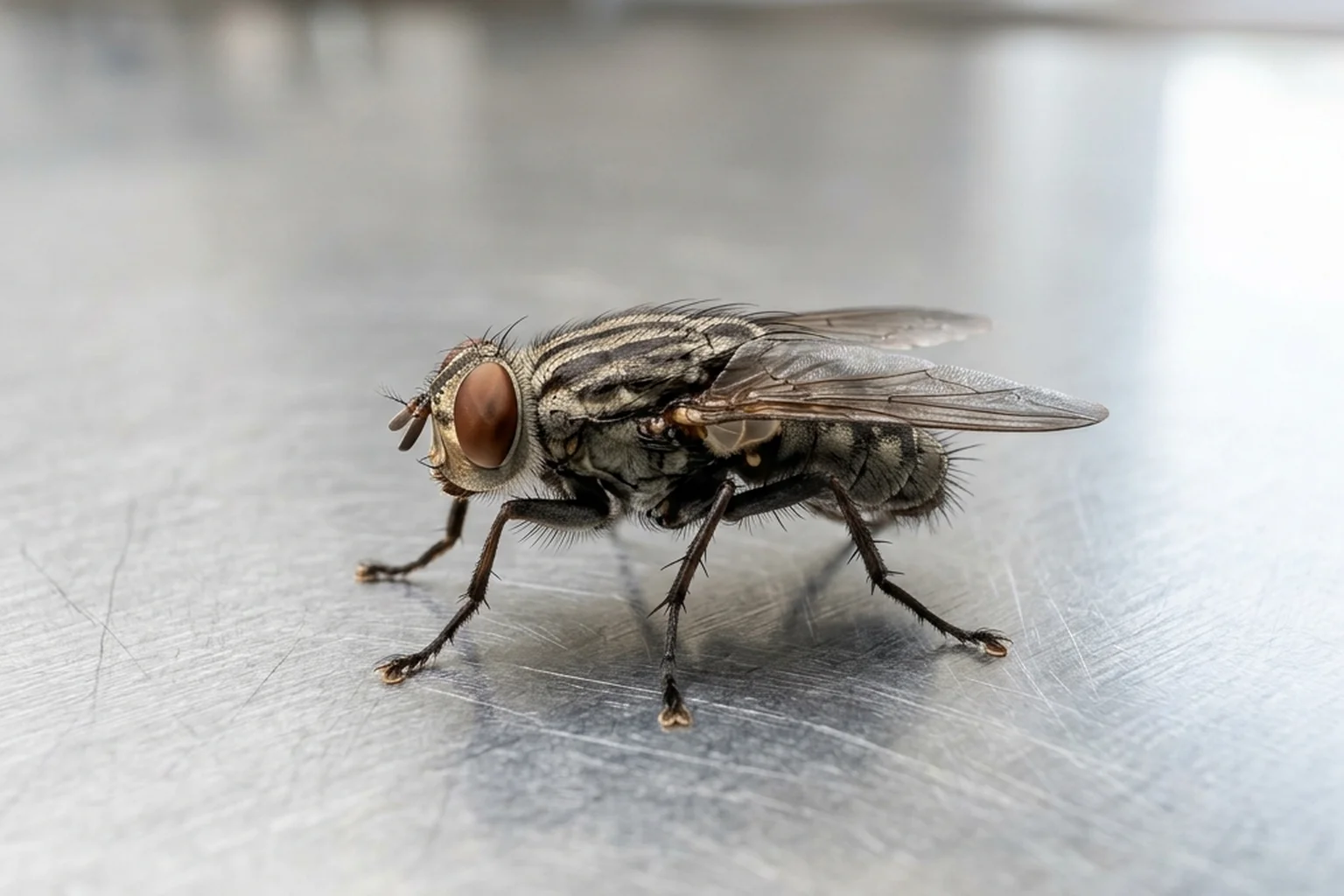
The House Fly is far more than an annoyance — it's one of the most significant disease-spreading pests in any food environment. It feeds on decaying organic matter, garbage, and faeces, picking up bacteria on its body and mouthparts, then lands on food and food-contact surfaces, contaminating them with pathogens like salmonella and E. coli. It also vomits and defecates as it feeds. In Dubai's restaurants, cafes, supermarkets, and commercial kitchens, visible flies are an immediate hygiene concern and a Dubai Municipality inspection risk. They breed rapidly in garbage rooms, bins, and organic waste, so swatting adults achieves nothing against the source.
Santera's Dubai Municipality-certified technicians control House Flies with an integrated approach: identifying and treating breeding sites, improving waste and drainage hygiene, installing and servicing fly-control units (such as insect light traps), and applying targeted treatments. For F&B and hospitality clients, we deliver documented fly-management programmes aligned with HACCP and Dubai Municipality standards.
Get to know the physical signs and behavioral patterns associated with this species. Knowledge of these specific traits helps in maintaining a secure and pest-free environment.
Santera provides Pest control and prevention across Dubai, with primary service coverage in:

Santera gets rid of House Flies in Dubai with a Dubai Municipality-certified process: our technicians inspect to find the breeding source and entry points, apply targeted treatment that eliminates the problem at its source, and put prevention measures in place so it doesn't come back. For restaurants, hotels, and food businesses, all work follows HACCP protocols and Dubai Municipality standards.
You can try, but DIY rarely solves a House Fly problem in Dubai for good. Shop-bought sprays and home remedies tend to deal with what you can see while missing the breeding source in drains, waste, or decaying matter, so the problem returns. Lasting control means targeting the source — which is where professional treatment makes the difference.
Because the source survives. House Flies breed extremely fast. A female lays batches of 75–150 eggs, up to 500 in her lifetime, in moist organic matter. That's exactly why surface sprays and one-off DIY fail — they hit what's visible while the source keeps producing more, so lasting control has to target the source, not just the symptoms.
Watch for House Flies themselves and the signs they leave. House Flies are about 6–7mm long, dull grey, with four dark lengthwise stripes on the thorax, large reddish compound eyes, and a single pair of wings. House Flies are active by day and rest at night on ceilings, walls, and wires. They are strong fliers but stay near breeding and food sources. Catching it early, before numbers build, makes treatment far easier.
House Flies don't bite, but they're a major disease risk: they feed on waste and faeces, then land on food and surfaces, spreading bacteria like salmonella and E. coli with every contact.
House Flies feed on a wide range of organic matter — food residue, sugary and decaying material, garbage, and faeces. They liquefy solid food with saliva and sponge it up, regurgitating and defecating frequently as they feed. In Dubai they are drawn to kitchens, bins, garbage rooms, and food waste, transferring contamination from filth to food. Cut off these food, water, and shelter sources and you remove what draws them in — but an established population still needs targeted treatment to clear fully.