24/7 Pest Control in the UAE

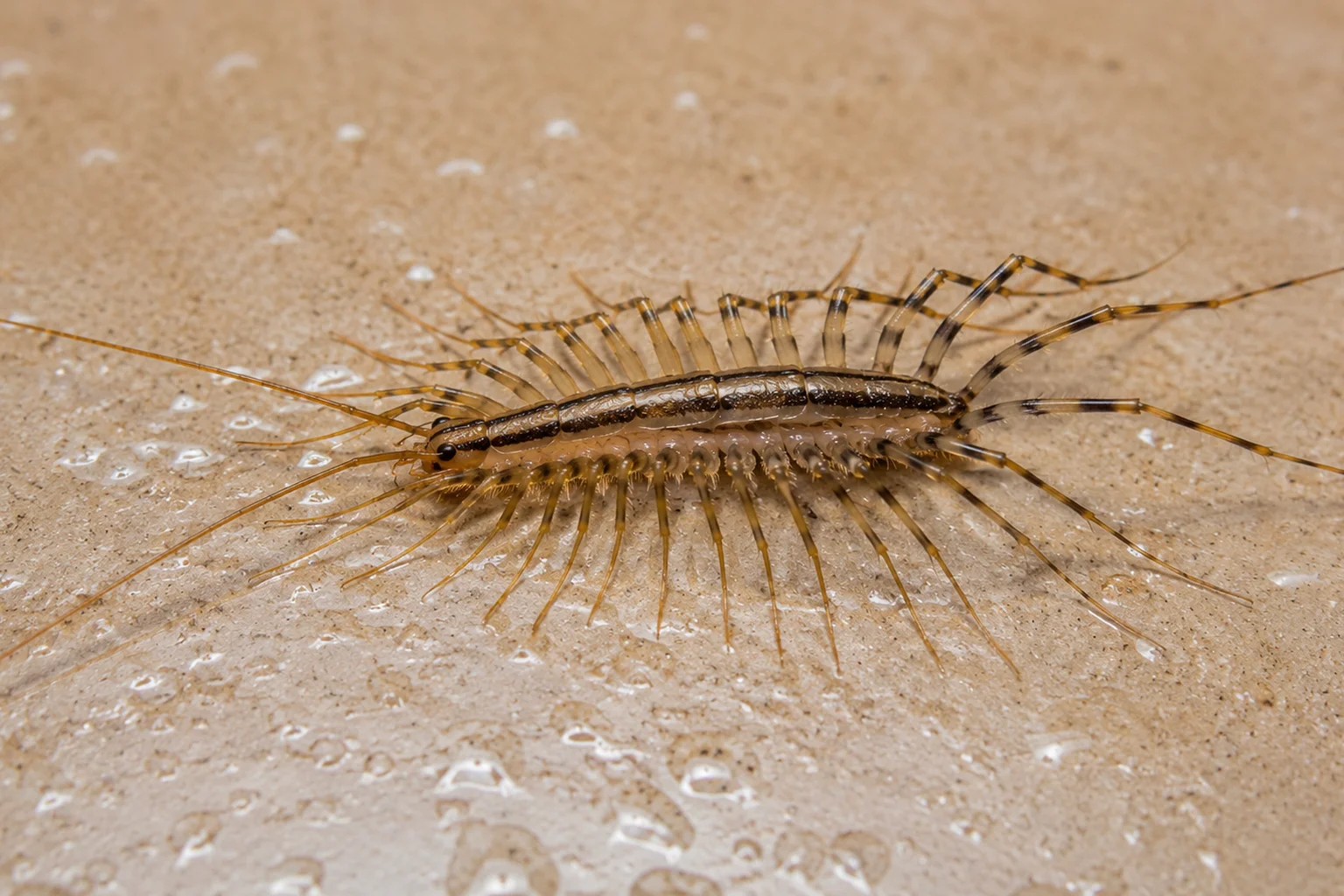
The House Centipede is the unnerving, extremely fast, long-legged centipede that suddenly appears on a wall or ceiling in Dubai bathrooms, kitchens, and ground-floor rooms and vanishes just as quickly. Its appearance — a flattened body fringed with many long, delicate legs — is alarming, but it is largely harmless to people: it is shy, flees rather than confronts, and although it technically can bite if handled, this is rare and produces only minor, brief discomfort comparable to a mild sting. Importantly, the house centipede is a beneficial predator that hunts cockroaches, silverfish, spiders, and other household insects, so its presence often indicates other pest activity it's feeding on. It prefers damp areas, which is why bathrooms and kitchens are common sighting spots. The main issue is the fright it causes rather than any genuine danger.
Santera's Dubai Municipality-certified technicians manage House Centipedes mainly by controlling the insect prey that attracts them and reducing damp harbourage and entry points, with accurate reassurance about their harmless, beneficial nature, in line with Dubai Municipality standards. For villas and apartments, we address the underlying pests they feed on.
Get to know the physical signs and behavioral patterns associated with this species. Knowledge of these specific traits helps in maintaining a secure and pest-free environment.
Santera provides Pest control and prevention across Dubai, with primary service coverage in:

Santera gets rid of House Centipedes in Dubai with a Dubai Municipality-certified process: our technicians inspect to find the harbourage, prey, and entry points and entry points, apply targeted treatment that eliminates the problem at its source, and put prevention measures in place so it doesn't come back.
You can try, but DIY rarely solves a House Centipede problem in Dubai for good. Shop-bought sprays and home remedies tend to deal with what you can see while missing the damp harbourage and the prey that draws them in, so the problem returns. Lasting control means targeting the source — which is where professional treatment makes the difference.
Because the source survives. House Centipedes lay eggs in damp, sheltered locations, with young hatching with fewer leg pairs and adding more as they moult and mature; they are relatively long-lived. Damp indoor conditions and available insect prey in Dubai homes allow them to persist, though they typically occur as individuals rather than large numbers. That's exactly why surface sprays and one-off DIY fail — they hit what's visible while the source keeps producing more, so lasting control has to target the source, not just the symptoms.
Watch for House Centipedes themselves and the signs they leave. The House Centipede is distinctive, about 2.5–5cm in body length but appearing larger due to 15 pairs of very long, delicate legs that fringe its flattened, greyish-yellow body marked with darker stripes. The House Centipede is nocturnal, exceptionally fast, and shy, hiding by day in damp, dark spots — around drains, in bathrooms, basements, and ground-floor areas — and hunting at night. It flees rapidly when disturbed and bites only if handled, with minor effect. Catching it early, before numbers build, makes treatment far easier.
Largely no — despite their alarming look, House Centipedes are mostly harmless, rarely bite, and actually hunt cockroaches and other pests; the fright is worse than any danger.
The House Centipede is a predator that feeds on insects and other small invertebrates — cockroaches, silverfish, spiders, flies, and similar household pests — catching them with its legs and front claws. In Dubai homes, its presence reflects available prey, so it acts as a natural control on other insects, and reducing those pests removes its food source. Cut off these food, water, and shelter sources and you remove what draws them in — but an established population still needs targeted treatment to clear fully.