24/7 Pest Control in the UAE

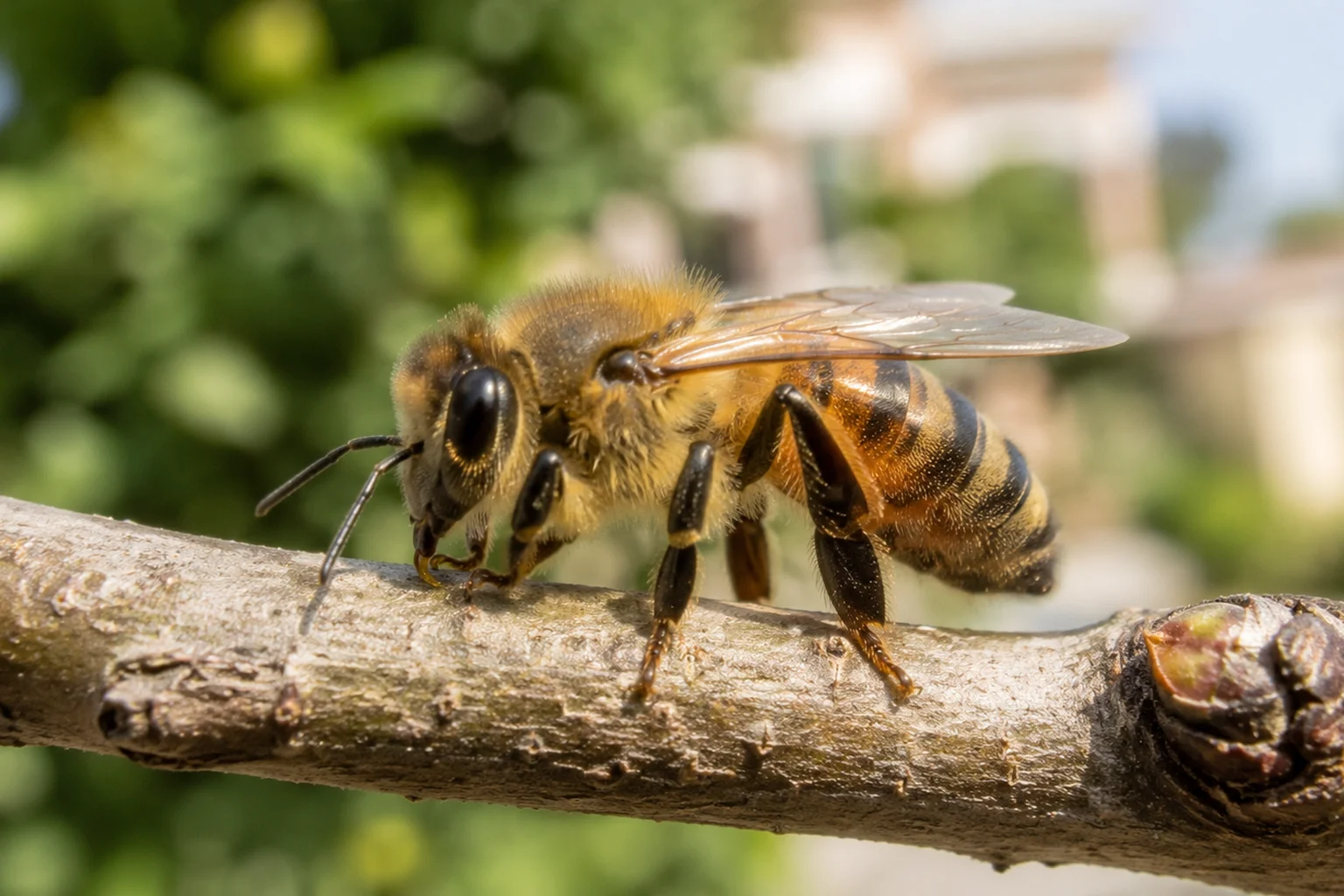
The Honey Bee is a beneficial and ecologically vital pollinator, and that's exactly why it requires careful, responsible handling rather than casual extermination. Problems arise when a swarm settles or a colony establishes inside a Dubai building — in wall cavities, roof spaces, chimneys, AC housings, or hollow structures. An active colony near people poses a real sting risk (dangerous, potentially life-threatening, for anyone with a bee-sting allergy), and a colony living inside a structure builds wax comb and stores honey that can damage the building, stain walls, and — if the colony later dies or is killed improperly — attract other pests and rot. Disturbing a hive or attempting DIY removal can provoke mass defensive stinging. Because of their environmental value, the right response is safe, professional management and, wherever possible, relocation rather than destruction.
Santera's Dubai Municipality-certified technicians handle Honey Bee swarms and colonies safely, with appropriate protective equipment, prioritising safe relocation where feasible and proper removal of comb and entry-proofing, in line with Dubai Municipality standards. For villas, schools, and facilities, we provide prompt, responsible response.
Get to know the physical signs and behavioral patterns associated with this species. Knowledge of these specific traits helps in maintaining a secure and pest-free environment.
Santera provides Pest control and prevention across Dubai, with primary service coverage in:

Santera handles Honey Bees in Dubai with a Dubai Municipality-certified, safety-first process: trained technicians locate and deal with the colony (relocating bees where possible) using proper equipment, then advise on prevention so the risk doesn't return. Given the danger, this should never be attempted yourself.
It isn't safe to deal with Honey Bees yourself. Attempting to handle or remove them risks the colony, which is dangerous and best not provoked, and DIY methods rarely resolve the underlying problem. The safe, effective route is trained professional response.
Because the source survives. A colony is founded by a queen, who lays the eggs for the entire colony; reproduction at the colony level occurs through swarming, where the old queen leaves with a portion of workers to establish a new nest while a new queen takes over the original. An established cavity colony can grow large and persist, building extensive comb within a structure. That's exactly why surface sprays and one-off DIY fail — they hit what's visible while the source keeps producing more, so lasting control has to target the source, not just the symptoms.
Watch for Honey Bees themselves and the signs they leave. Honey Bees are about 12–15mm long, golden-brown to amber with darker bands across a hairy abdomen, and a furry thorax. Honey Bees are highly social, living in large colonies headed by a queen, with thousands of workers. They communicate and coordinate foraging and defence. Catching it early, before numbers build, makes treatment far easier.
Honey Bees sting only defensively, but a sting is dangerous to anyone allergic, and a colony defending its nest can deliver many stings — so they're best relocated by professionals, never provoked.
Honey Bees feed on nectar and pollen from flowers, which they also collect to feed the colony and produce honey. In Dubai they forage on gardens, flowering plants, and landscaping. Their foraging is beneficial pollination; conflict with people arises not from feeding but from where they choose to nest and swarm near or within buildings. Cut off these food, water, and shelter sources and you remove what draws them in — but an established population still needs targeted treatment to clear fully.