24/7 Pest Control in the UAE

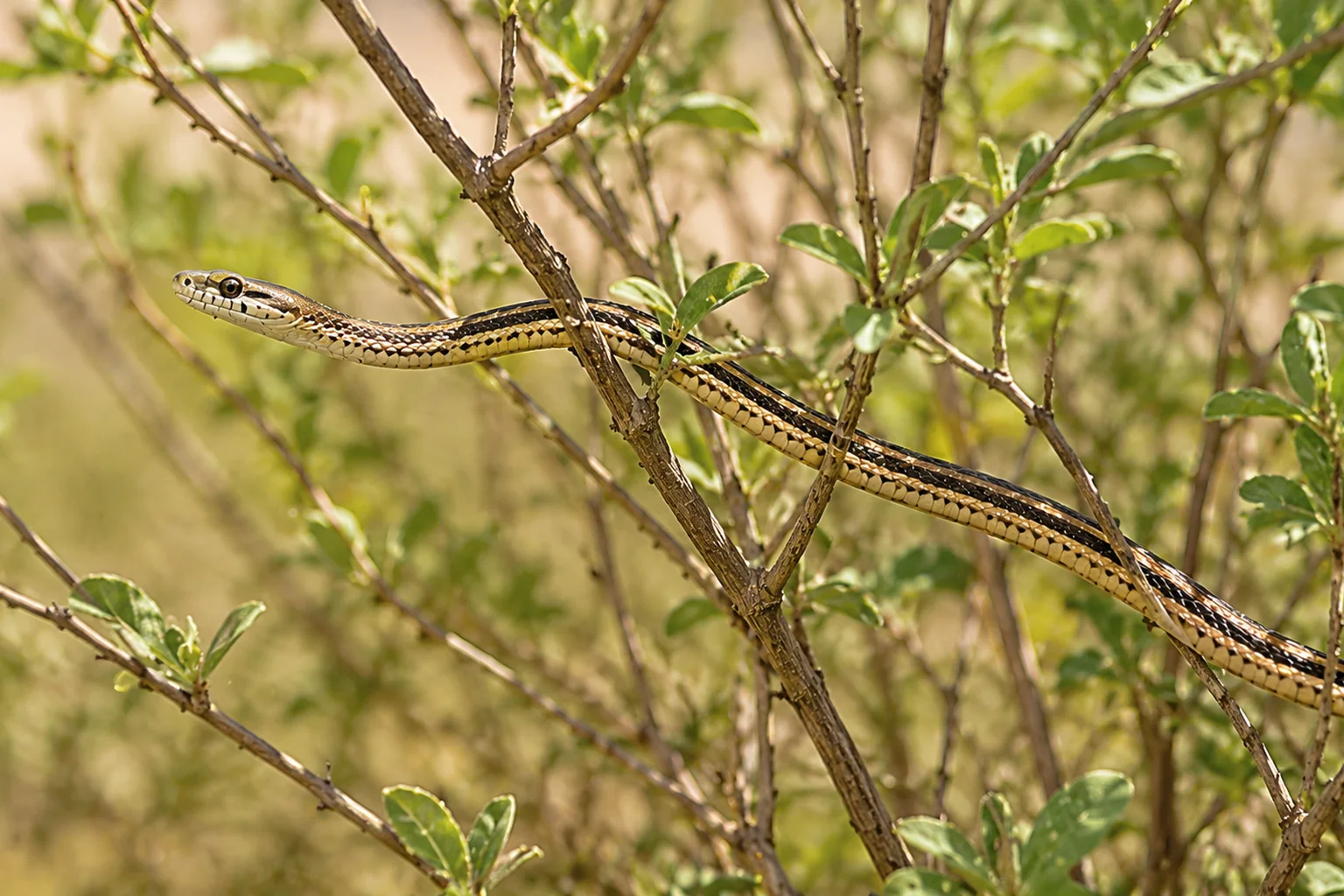
The Gulf Sand Snake (or Schokari sand racer) is a slim, extremely fast desert snake frequently encountered in Dubai's gardens, sandy ground, and desert-edge areas. It is technically mildly venomous, but it is rear-fanged with weak venom adapted for subduing small prey, and it poses no meaningful danger to humans — bites to people are very rare, would require deliberate handling, and have negligible effect. It is a shy, day-active hunter that flees at high speed when disturbed. As with other native snakes, the real problem is the alarm caused by its sudden, rapid appearance, and the risk that residents harm a harmless, beneficial predator out of fear. It helps control lizard and small-rodent populations around properties.
Santera's Dubai Municipality-certified technicians safely identify and relocate Gulf Sand Snakes, confirm the species, and advise on simple measures to reduce snake presence, in line with Dubai Municipality and wildlife-handling standards. For villas and compounds, we provide calm, accurate, expert response.
Get to know the physical signs and behavioral patterns associated with this species. Knowledge of these specific traits helps in maintaining a secure and pest-free environment.
Santera provides Pest control and prevention across Dubai, with primary service coverage in:

Santera handles Gulf Sand Snakes in Dubai with a Dubai Municipality-certified, safety-first process: trained technicians locate and deal with the snake itself, safely using proper equipment, then advise on prevention so the risk doesn't return. Given the danger, this should never be attempted yourself.
It isn't safe to deal with Gulf Sand Snakes yourself. Attempting to handle or remove them risks the risk of handling a snake yourself, and DIY methods rarely resolve the underlying problem. The safe, effective route is trained professional response.
Because the source survives. The Gulf Sand Snake lays eggs, with females depositing a clutch in sheltered sandy locations and the young emerging independent. As a harmless, beneficial species, its presence reflects a healthy prey base and poses no genuine risk, though residents may still request relocation for comfort. That's exactly why surface sprays and one-off DIY fail — they hit what's visible while the source keeps producing more, so lasting control has to target the source, not just the symptoms.
Watch for Gulf Sand Snakes themselves and the signs they leave. The Gulf Sand Snake is slender and long, often 70–120cm, with a narrow head, large eyes with round pupils, and a streamlined body built for speed. This snake is diurnal, exceptionally fast, and alert, typically seen darting across open sandy ground or through vegetation before disappearing rapidly. It is shy and avoids people, relying on speed rather than confrontation. Catching it early, before numbers build, makes treatment far easier.
Effectively no — the Gulf Sand Snake is only mildly rear-fanged venomous and poses no real danger to humans; bites to people are extremely rare and negligible.
The Gulf Sand Snake preys mainly on lizards, along with small rodents and other small animals, using its speed to hunt actively by day and mild rear-fanged venom to subdue prey. In Dubai's gardens and sandy areas, abundant lizards provide its main food, and as a predator it helps regulate these populations. Cut off these food, water, and shelter sources and you remove what draws them in — but an established population still needs targeted treatment to clear fully.