24/7 Pest Control in the UAE

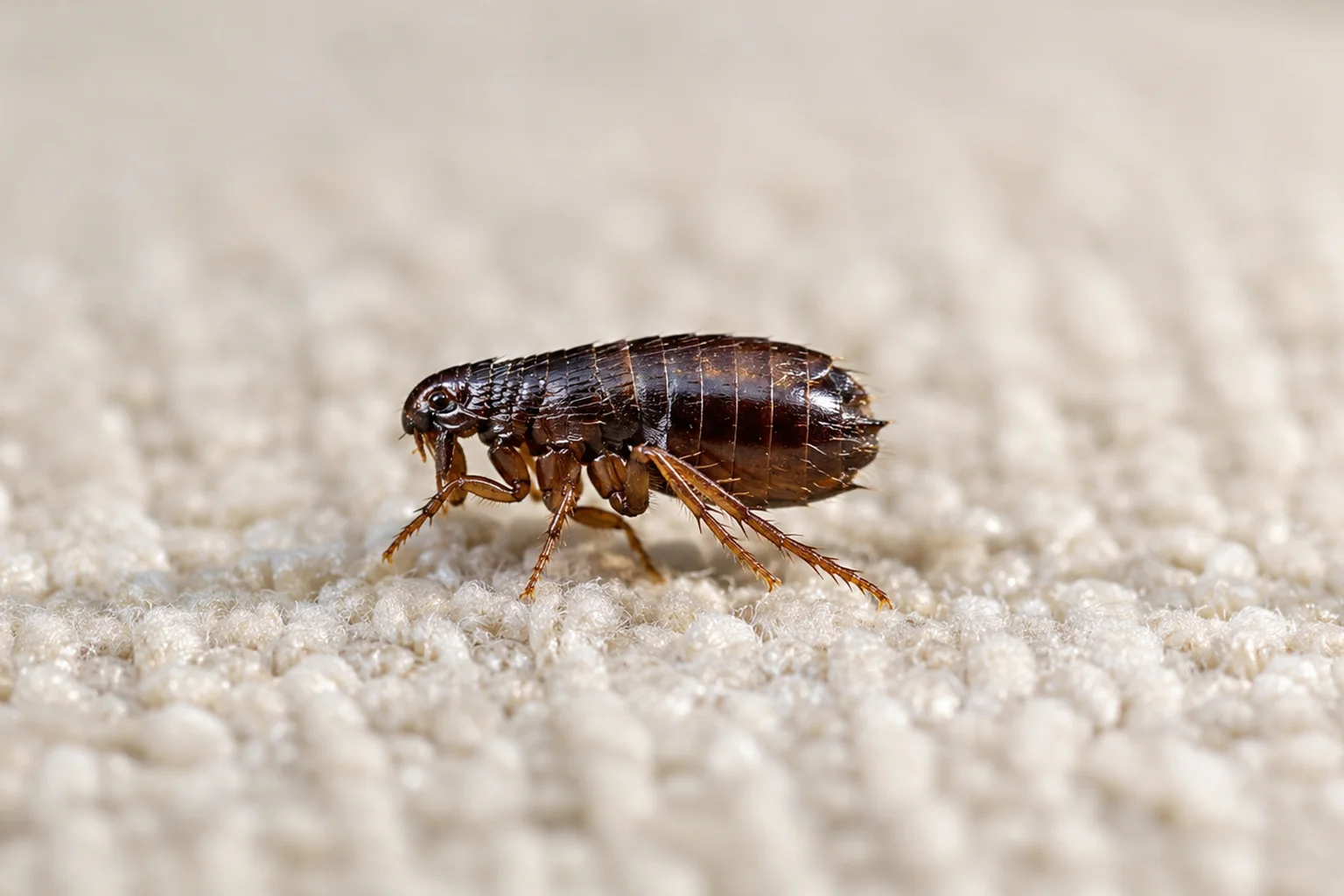
The Dog Flea infests dogs and other pets in Dubai homes and bites people as well, causing intense itching, skin irritation, and in some pets and people allergic reactions (flea allergy dermatitis). Like the cat flea, it follows a life cycle where adults feed on the host but eggs, larvae, and pupae develop in the surrounding environment — carpets, rugs, bedding, furniture, and crevices — so the fleas seen on the pet represent only a fraction of the total infestation. Dog fleas can also act as an intermediate host for tapeworm, adding a health dimension for pets. As with all fleas, protected pupae can lie dormant and emerge later, and treating only the animal or only spraying surfaces leaves the hidden stages to re-establish the infestation.
Santera's Dubai Municipality-certified technicians control Dog Fleas with a coordinated environmental treatment targeting every life stage in the home, combined with advice to treat pets through a vet. For villas, apartments, and pet-owning households, we deliver thorough, safe flea control aligned with Dubai Municipality standards.
Get to know the physical signs and behavioral patterns associated with this species. Knowledge of these specific traits helps in maintaining a secure and pest-free environment.
Santera provides Pest control and prevention across Dubai, with primary service coverage in:

Santera gets rid of Dog Fleas in Dubai with a Dubai Municipality-certified process: our technicians inspect to find the all flea life stages in the home environment and entry points, apply targeted treatment that eliminates the problem at its source, and put prevention measures in place so it doesn't come back.
You can try, but DIY rarely solves a Dog Flea problem in Dubai for good. Shop-bought sprays and home remedies tend to deal with what you can see while missing the eggs, larvae, and pupae hidden in carpets and bedding, so the problem returns. Lasting control means targeting the source — which is where professional treatment makes the difference.
Because the source survives. A female Dog Flea lays numerous eggs that drop off the host into the environment. In Dubai's warmth the life cycle completes in weeks, and dormant pupae prolong infestations, so populations grow quickly and recur if the environmental stages in carpets and bedding aren't addressed alongside the pet. That's exactly why surface sprays and one-off DIY fail — they hit what's visible while the source keeps producing more, so lasting control has to target the source, not just the symptoms.
Watch for Dog Fleas themselves and the signs they leave. The Dog Flea is a tiny wingless insect about 1–3mm long, reddish-brown to dark brown, with a body flattened from side to side for moving through fur and strong hind legs for jumping. Adult Dog Fleas live and breed on the host, while eggs, larvae, and pupae develop off-host in carpets, bedding, and crevices. Pupae can remain dormant in their cocoons and emerge in response to a nearby host, causing sudden flea activity. Catching it early, before numbers build, makes treatment far easier.
Yes — Dog Fleas bite people as well as pets, causing itching and possible allergic reactions, and they can transmit tapeworm to pets.
Adult Dog Fleas feed on the blood of their host — dogs, other pets, and people. The larvae do not bite, feeding instead on organic debris and dried blood (adult flea faeces) in the environment. In Dubai homes, pets supply blood meals for adults while carpets and bedding sustain the developing larvae. Cut off these food, water, and shelter sources and you remove what draws them in — but an established population still needs targeted treatment to clear fully.