How Do I Get Rid of Pest in Dubai?

The Desert Subterranean Termite is the species most responsible for serious structural timber damage in Dubai homes. It nests in the soil and builds protective mud tubes to bridge from the ground into a building's woodwork, then eats wood from the inside out — attacking door and window frames, skirting, roof timbers, and any cellulose it can reach. The first visible sign is often pencil-thin mud tubes on walls or foundations, or timber that sounds hollow. By then, significant hidden damage has usually occurred. Surface sprays do nothing to a colony living in the soil and inside your walls.

Santera's Dubai Municipality-certified technicians treat Desert Subterranean Termites with soil termiticide barriers and colony-elimination baiting systems that target the underground nest, not just the visible tubes. We inspect mud tubes, structural timber, and moisture conditions, then design ongoing protection. For villas, developers, and property managers, we provide pre- and post-construction soil treatment and monitoring aligned with Dubai Municipality requirements.

Book Your Free Inspection

Species Insights & Biology

Get to know the physical signs and behavioral patterns associated with this species. Knowledge of these specific traits helps in maintaining a secure and pest-free environment.

Appearance

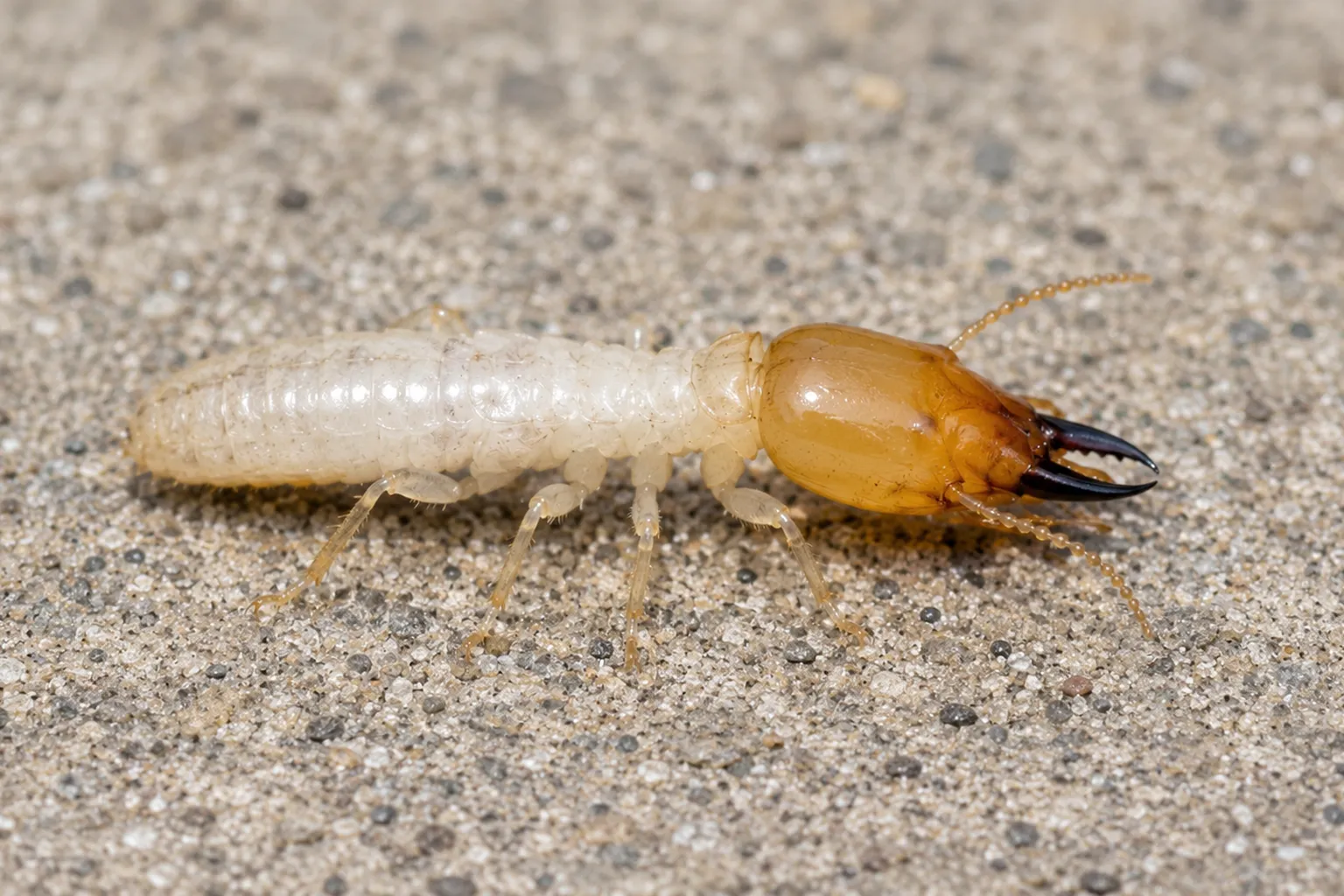
Desert Subterranean Termites are small, pale, soft-bodied insects in a caste system. Workers are creamy-white, blind, and cause the damage; soldiers have elongated darker heads with strong jaws; winged reproductives are darker and swarm to start new colonies. The destructive workers remain concealed in soil and timber and are rarely seen in the open.

Diet

Desert Subterranean Termites feed on cellulose — structural timber, door and window frames, skirting, paper, and cardboard. In Dubai they target the woodwork of villas and buildings, consuming it from within while leaving a thin surface layer that conceals the damage until it fails.

Behavior

Subterranean by nature, they nest in soil and construct distinctive mud tubes to travel from the ground into structures while staying protected from dry air. They forage continuously and silently, attacking accessible timber throughout a building. Their hidden, soil-based lifestyle is why infestations are typically discovered only after substantial damage.

Reproduction

Colonies contain a queen, king, workers, soldiers, and reproductives, and can grow very large over time. Winged alates swarm periodically to found new colonies nearby. As long as the soil-based colony survives, it keeps sending workers into structures, so eliminating the colony — not just treating tubes — is essential.

Prevention Tips

Watch for mud tubes on foundations and walls, and check for hollow-sounding timber. Keep wood and cellulose away from soil contact, reduce moisture and fix leaks near foundations, and ensure good drainage. Remove buried timber and cardboard near the building. Given the high cost of structural damage, arrange a Santera termite inspection and soil-barrier protection programme — especially for villas and new construction.

Where We Treat Pest in Dubai

Santera provides Pest control and prevention across Dubai, with primary service coverage in:

place
DAMAC Hills
place
Town Square
place
Al Barsha
place
JBR
place
JVC
place
Business Bay
place
Downtown Dubai
place
JLT
place
Dubai Marina
place
The Villa
place
Mudon
place
Al Barari
place
Jumeirah Golf Estates
place
Dubai Hills Estate
place
Arabian Ranches
place
Emirates Hills
place
Ibn Battuta
place
Mall of the Emirates
place
Dubai Mall
place
DAFZA
place
Jebel Ali
place
Al Quoz
place
Dubai Industrial City
place
Dubai Investment Park
place
JAFZA
place
Sheikh Zayed Road
place
Media City
place
Internet City
place
Jumeirah Beach
place
La Mer
place
DIFC
place
City Walk
place
Bluewaters
place
Downtown
place
Palm Jumeirah
Desert Subterranean Termite

Common Questions & Expert Answers

Book Your Free Inspection
How does Santera get rid of Desert Subterranean Termites in Dubai?

Santera gets rid of Desert Subterranean Termites in Dubai with a Dubai Municipality-certified process: our technicians inspect to find the colony and entry points, apply targeted treatment that eliminates the problem at its source, and put prevention measures in place so it doesn't come back.

Can I get rid of Desert Subterranean Termites myself, or do I need professional pest control?

You can try, but DIY rarely solves a Desert Subterranean Termite problem in Dubai for good. Shop-bought sprays and home remedies tend to deal with what you can see while missing the colony hidden in the soil or inside the timber, so the problem returns. Lasting control means targeting the source — which is where professional treatment makes the difference.

Why do Desert Subterranean Termites keep coming back after I treat them?

Because the source survives. Colonies contain a queen, king, workers, soldiers, and reproductives, and can grow very large over time. Winged alates swarm periodically to found new colonies nearby. That's exactly why surface sprays and one-off DIY fail — they hit what's visible while the source keeps producing more, so lasting control has to target the source, not just the symptoms.

How do I know if I have a Desert Subterranean Termite problem in Dubai?

Watch for Desert Subterranean Termites themselves and the signs they leave. Desert Subterranean Termites are small, pale, soft-bodied insects in a caste system. Subterranean by nature, they nest in soil and construct distinctive mud tubes to travel from the ground into structures while staying protected from dry air. They forage continuously and silently, attacking accessible timber throughout a building. Catching it early, before numbers build, makes treatment far easier.

Are Desert Subterranean Termites dangerous?

Termites don't bite or harm people, but the Desert Subterranean Termite causes serious structural damage, eating timber from the inside out and weakening your property before you ever see it.

What attracts Desert Subterranean Termites to homes and businesses in Dubai?

Desert Subterranean Termites feed on cellulose — structural timber, door and window frames, skirting, paper, and cardboard. In Dubai they target the woodwork of villas and buildings, consuming it from within while leaving a thin surface layer that conceals the damage until it fails. Cut off these food, water, and shelter sources and you remove what draws them in — but an established population still needs targeted treatment to clear fully.

Experience Guaranteed Results and Satisfied Pest Treatment Services

20+

Years Experience

All

Across UAE

10k+

Treatments

Select a Service

What pest problem can we help you with?

Property Details

Tell us about your property

Choose Date & Time

When would you like us to visit?

Contact Information

How can we reach you?

Expert Help is on the Way!

We’ve received your request. Santera is ready to protect your home/business—talk to you soon!
Oops! Something went wrong while submitting the form.