24/7 Pest Control in the UAE

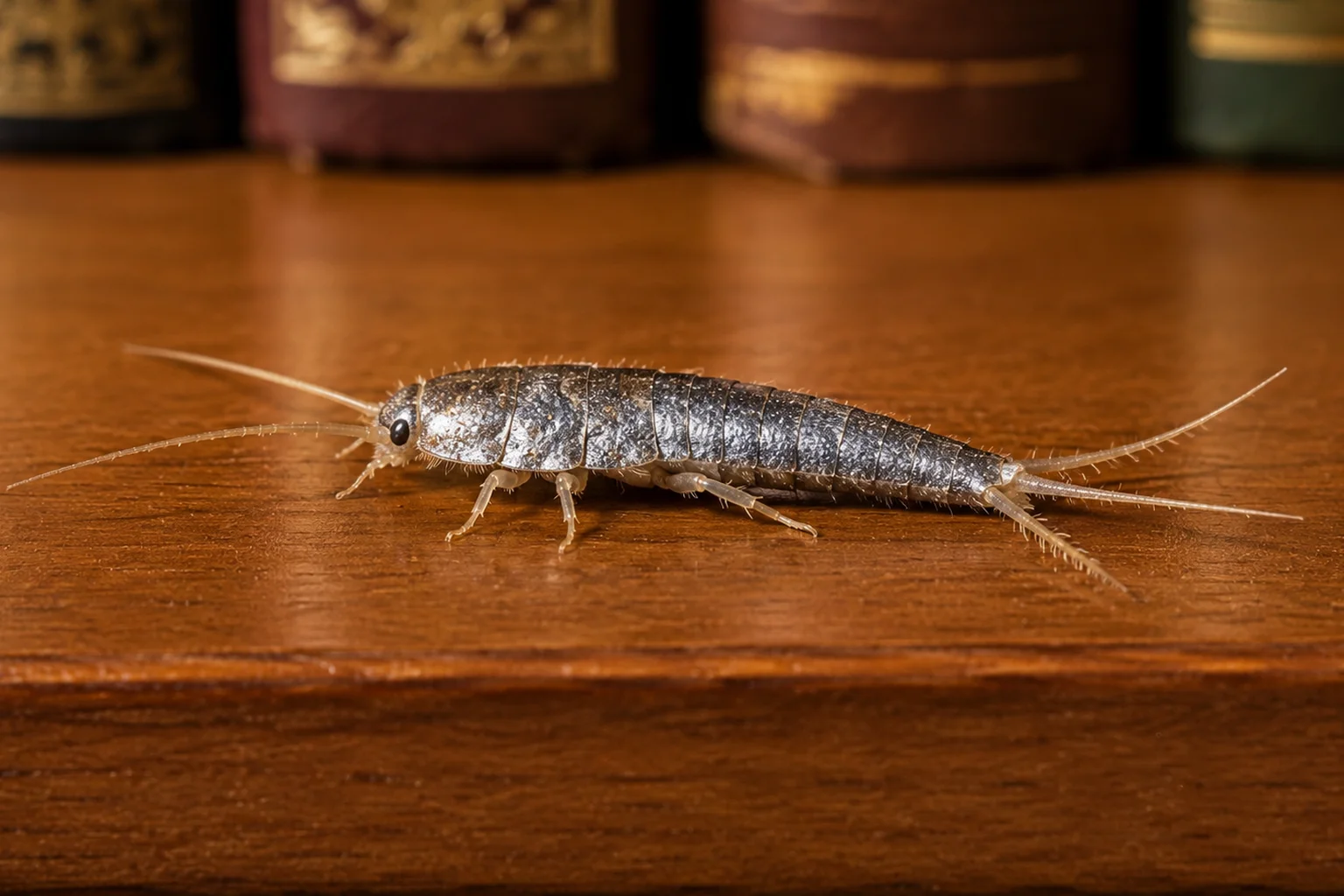
The Common Silverfish is a wingless, silvery, fish-shaped insect that moves with a distinctive wriggling motion and darts for cover when disturbed — commonly seen when moving boxes, books, or stored items in humid areas of Dubai homes. It thrives in moisture and warmth, which Dubai supplies abundantly, favouring bathrooms, kitchens, storerooms, cupboards, and around plumbing. It feeds on starchy and carbohydrate-rich materials: paper, book bindings, glue and paste, wallpaper, cardboard, photographs, and natural fibres — so it damages books, documents, archived papers, wallpaper, and stored clothing and linens. While it poses no health threat or bite, it can quietly ruin valuable papers and textiles, and a persistent silverfish problem is a reliable indicator of excess humidity or damp that should be corrected as part of control.
Santera's Dubai Municipality-certified technicians control Silverfish by treating harbourage and entry points, advising on the moisture and humidity conditions that sustain them, and protecting stored papers and textiles. For villas, offices, and archives, we deliver targeted treatment and prevention advice aligned with Dubai Municipality standards.
Get to know the physical signs and behavioral patterns associated with this species. Knowledge of these specific traits helps in maintaining a secure and pest-free environment.
Santera provides Pest control and prevention across Dubai, with primary service coverage in:

Santera gets rid of Common Silverfish in Dubai with a Dubai Municipality-certified process: our technicians inspect to find the harbourage and the damp conditions feeding them and entry points, apply targeted treatment that eliminates the problem at its source, and put prevention measures in place so it doesn't come back.
You can try, but DIY rarely solves a Common Silverfish problem in Dubai for good. Shop-bought sprays and home remedies tend to deal with what you can see while missing the harbourage and the humidity that sustains them, so the problem returns. Lasting control means targeting the source — which is where professional treatment makes the difference.
Because the source survives. Silverfish develop gradually, with females laying eggs in cracks and sheltered spots; the young resemble small adults and mature slowly over months. They are long-lived for insects. That's exactly why surface sprays and one-off DIY fail — they hit what's visible while the source keeps producing more, so lasting control has to target the source, not just the symptoms.
Watch for Common Silverfish themselves and the signs they leave. The Common Silverfish is a small wingless insect about 10–12mm long, with a tapered, carrot- or fish-shaped body covered in silvery-grey scales giving a metallic sheen. Silverfish are nocturnal, fast-moving, and secretive, hiding by day in dark, humid cracks and crevices — around plumbing, in cupboards, behind skirting, and among stored papers and boxes — and emerging at night to feed. They are strongly tied to humid conditions and avoid light, so they're usually noticed only when their harbourage is disturbed. Catching it early, before numbers build, makes treatment far easier.
No — Silverfish don't bite or harm people. The damage they cause is to property: they feed on paper, books, wallpaper, and textiles, ruining documents and stored items.
Silverfish feed on carbohydrates and starches, especially paper, book bindings, glue and paste, wallpaper, cardboard, cereals, and natural fibres such as cotton and linen. In Dubai homes and offices they damage books, documents, wallpaper, and stored textiles. Their preference for starchy materials is why archives, storerooms, and cupboards are common infestation sites. Cut off these food, water, and shelter sources and you remove what draws them in — but an established population still needs targeted treatment to clear fully.