24/7 Pest Control in the UAE

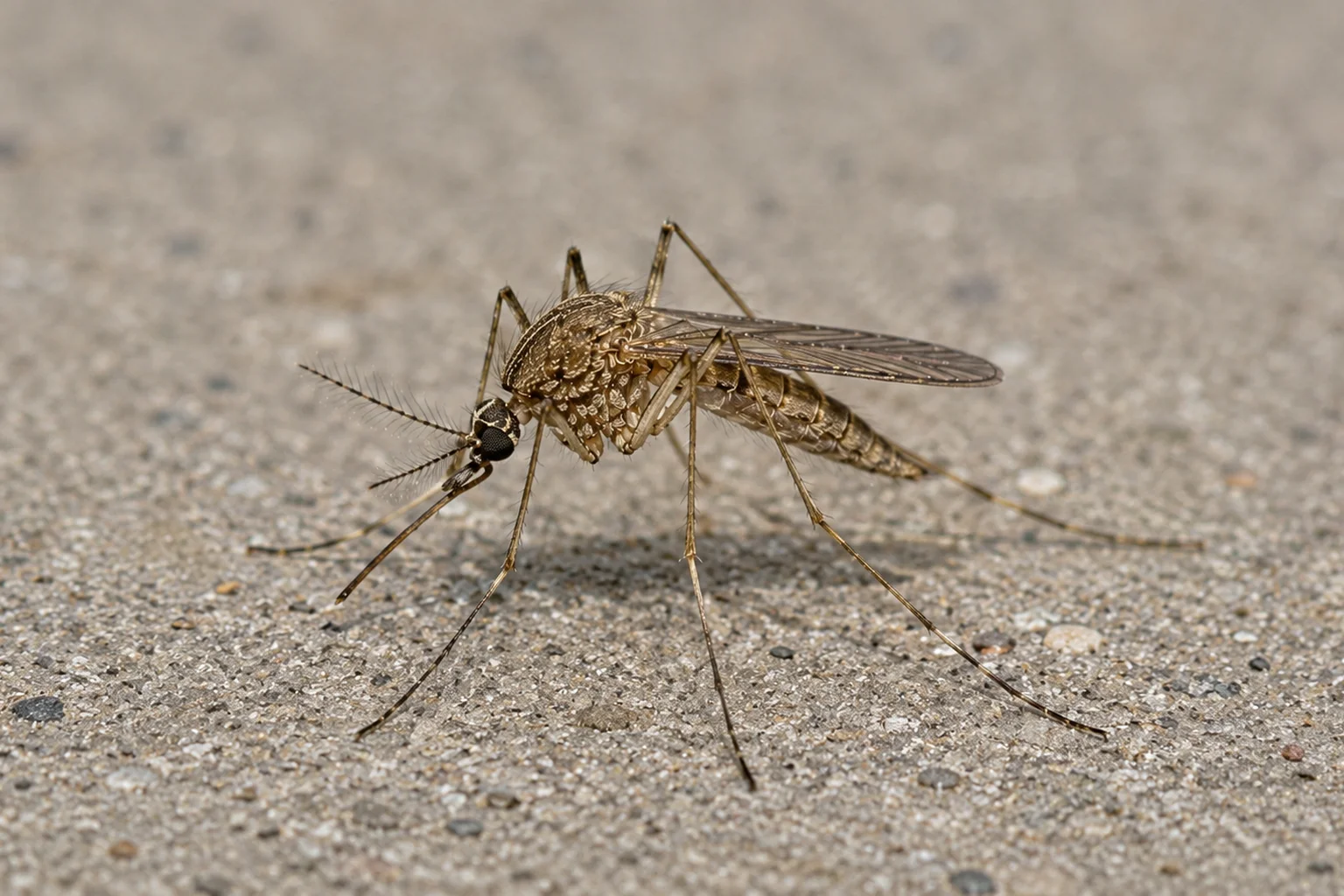
The Common House Mosquito is a widespread night-time biter and a close relative of the Southern House Mosquito, with similar habits and the same nuisance impact across Dubai homes. It's active from dusk into the night, entering through open windows and unscreened openings to bite sleeping occupants. It breeds in stagnant water rich in organic matter — blocked drains, water-filled containers, neglected ponds, sumps, and pooled water around gardens and buildings. It can carry West Nile virus. As with other mosquitoes, killing the adults indoors gives only temporary relief while larvae continue developing in standing water nearby.
Santera's Dubai Municipality-certified technicians control Culex pipiens by locating and treating breeding sites with larvicides, reducing standing and stagnant water, and managing resting adults around the property, alongside screening and proofing advice. For residential communities and facilities, we provide integrated, ongoing mosquito management in line with Dubai Municipality public-health standards.
Get to know the physical signs and behavioral patterns associated with this species. Knowledge of these specific traits helps in maintaining a secure and pest-free environment.
Santera provides Pest control and prevention across Dubai, with primary service coverage in:

Santera gets rid of Common House Mosquitoes in Dubai with a Dubai Municipality-certified process: our technicians inspect to find the breeding sites and entry points, apply targeted treatment that eliminates the problem at its source, and put prevention measures in place so it doesn't come back.
You can try, but DIY rarely solves a Common House Mosquito problem in Dubai for good. Shop-bought sprays and home remedies tend to deal with what you can see while missing the larvae developing in standing water you can't always see, so the problem returns. Lasting control means targeting the source — which is where professional treatment makes the difference.
Because the source survives. Females lay eggs in floating rafts of 100–300 eggs on stagnant water surfaces. In Dubai's warm climate larvae mature within roughly a week, and the ready availability of standing water allows the species to breed continuously and build up quickly. That's exactly why surface sprays and one-off DIY fail — they hit what's visible while the source keeps producing more, so lasting control has to target the source, not just the symptoms.
Watch for Common House Mosquitoes themselves and the signs they leave. The Common House Mosquito is a small to medium brown mosquito about 4–7mm long, with a fairly plain appearance and pale bands across the abdomen. The Common House Mosquito is nocturnal, sheltering in cool, dark places by day and biting at night. It breeds in stagnant, organically enriched water in both natural and artificial collections around homes and gardens. Catching it early, before numbers build, makes treatment far easier.
Yes — the Common House Mosquito bites at night and can carry West Nile virus.
Only females bite, taking blood to develop eggs while both sexes feed on nectar. This species feeds predominantly at night, biting humans, birds, and other animals. In Dubai it commonly enters homes after dark to feed on sleeping occupants, then rests in sheltered spots during the day. Cut off these food, water, and shelter sources and you remove what draws them in — but an established population still needs targeted treatment to clear fully.