24/7 Pest Control in the UAE

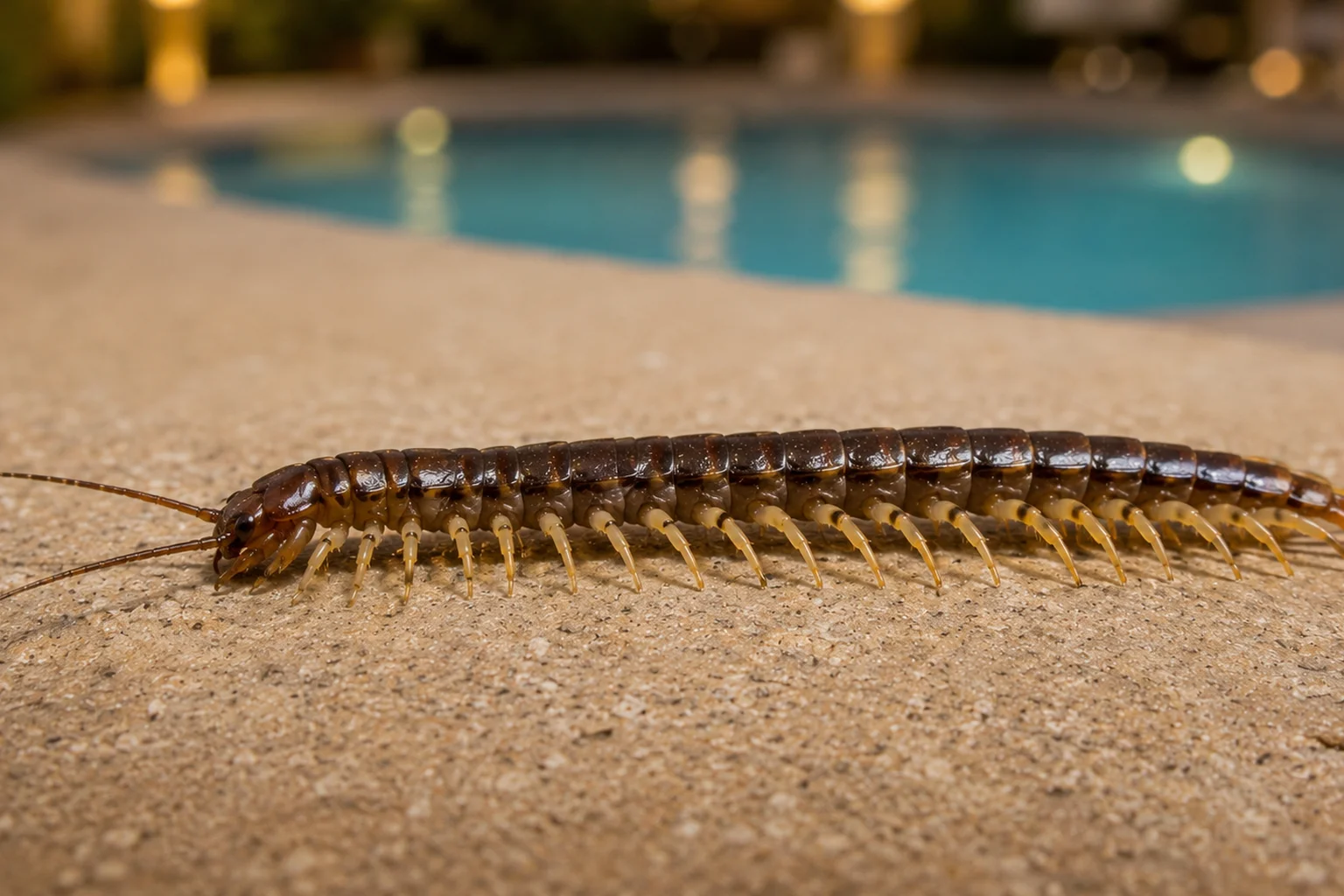
The large centipedes found in Dubai (Scolopendra species) are fast, predatory, and capable of a genuinely painful venomous bite — making them one of the more concerning multi-legged pests around homes. They can grow substantial in size, are aggressive when cornered, and use venom-bearing front legs (forcipules) to subdue prey and defend themselves. A bite causes intense, sharp pain, redness, and swelling, and while rarely dangerous to healthy adults, it can be more serious for children, the elderly, or sensitive individuals. They favour damp, sheltered spots — under rocks, in mulch and leaf litter, in drains, garages, bathrooms, and ground-floor areas of villas — and hunt insects at night, sometimes coming indoors in pursuit of prey or moisture. Their speed and bite mean they shouldn't be handled, and persistent indoor sightings warrant control of both the centipedes and the prey and damp conditions attracting them.
Santera's Dubai Municipality-certified technicians control centipedes by treating harbourage and entry points, reducing the damp conditions and insect prey that draw them, and proofing access routes, in line with Dubai Municipality standards. For villas and ground-floor properties, we deliver safe, targeted treatment.
Get to know the physical signs and behavioral patterns associated with this species. Knowledge of these specific traits helps in maintaining a secure and pest-free environment.
Santera provides Pest control and prevention across Dubai, with primary service coverage in:

Santera gets rid of Common Centipedes in Dubai with a Dubai Municipality-certified process: our technicians inspect to find the harbourage, prey, and entry points and entry points, apply targeted treatment that eliminates the problem at its source, and put prevention measures in place so it doesn't come back.
You can try, but DIY rarely solves a Common Centipede problem in Dubai for good. Shop-bought sprays and home remedies tend to deal with what you can see while missing the damp harbourage and the prey that draws them in, so the problem returns. Lasting control means targeting the source — which is where professional treatment makes the difference.
Because the source survives. Centipedes lay eggs in damp soil or sheltered harbourage, with some species guarding the eggs and young; they are relatively long-lived and slow-maturing. Persistent damp conditions and prey availability around Dubai properties allow them to establish and recur, so habitat and prey management are central to keeping numbers down. That's exactly why surface sprays and one-off DIY fail — they hit what's visible while the source keeps producing more, so lasting control has to target the source, not just the symptoms.
Watch for Common Centipedes themselves and the signs they leave. Dubai's large centipedes are elongated, flattened, and segmented, often several centimetres to over 10cm long, typically reddish-brown to dark in colour, sometimes with contrasting legs. Centipedes are nocturnal, fast-moving, and secretive, sheltering by day in damp, dark places — under rocks, in mulch, drains, garages, and bathrooms — and hunting prey at night. They are agile and will bite defensively if cornered or handled. Catching it early, before numbers build, makes treatment far easier.
Yes — Dubai's large centipedes can deliver a genuinely painful venomous bite, causing intense pain and swelling. They're not usually dangerous to healthy adults but should never be handled.
Centipedes are carnivorous predators, feeding on insects, spiders, and other small invertebrates, which they catch and subdue with their venomous front claws. In Dubai, areas with abundant insect prey — damp gardens, drains, and harbourage — attract them, so controlling other pests reduces the food source that draws centipedes toward and into buildings. Cut off these food, water, and shelter sources and you remove what draws them in — but an established population still needs targeted treatment to clear fully.