24/7 Pest Control in the UAE

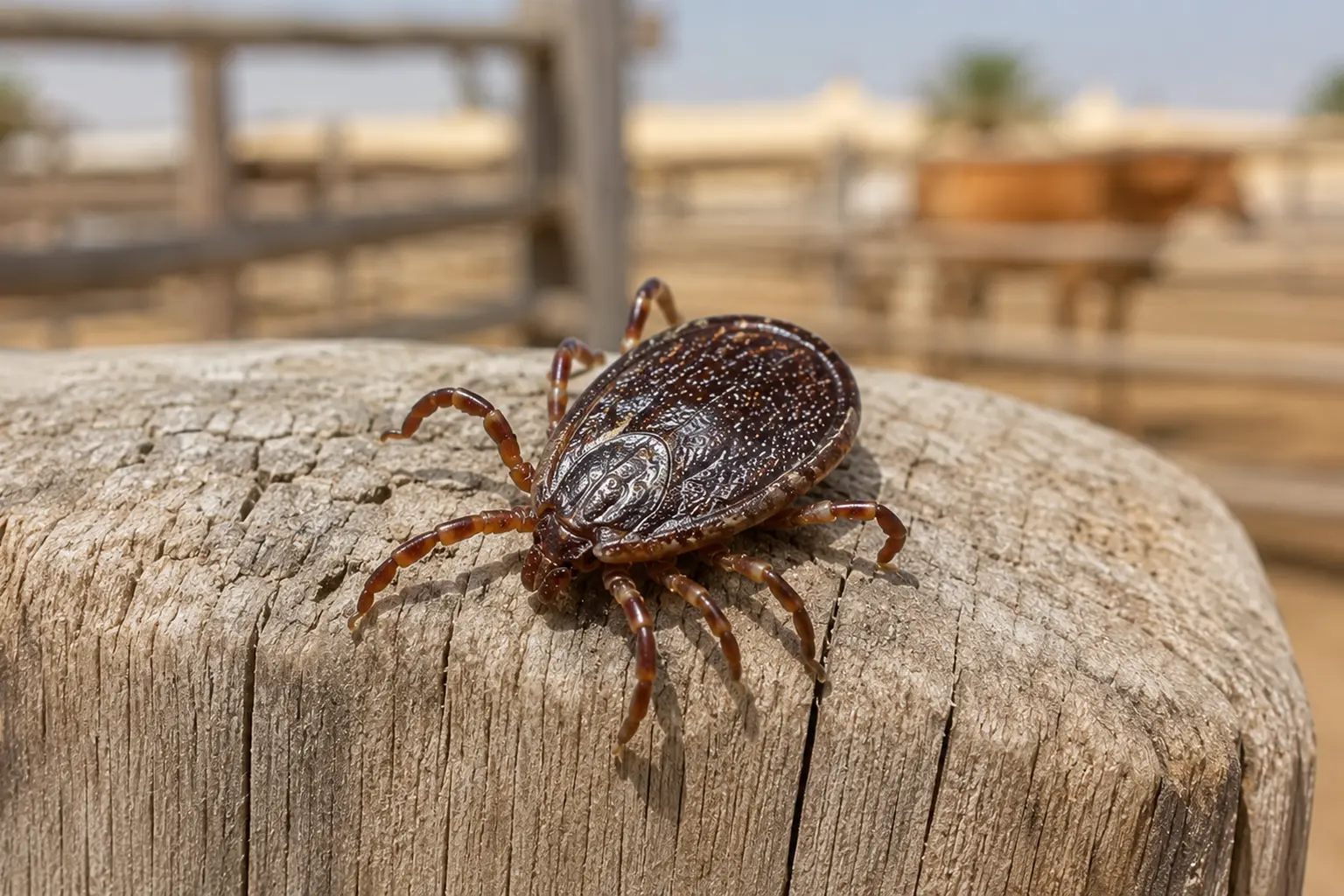
The Cattle Tick is an important livestock pest around Dubai's farms, stables, and animal facilities, feeding primarily on cattle and other livestock and transmitting diseases such as babesiosis ('cattle fever') and anaplasmosis that seriously affect animal health and productivity. It can also bite people who handle or work around infested animals. Heavy infestations drain livestock through blood loss, cause stress and skin damage, and spread infection through a herd, making this both an animal-welfare and an economic problem for farm and stable operators. The ticks feed on animals and then drop off to develop and lay eggs in the surrounding ground and housing, so the environment around livestock becomes a reservoir. Treating animals alone, without managing the environment and re-infestation, allows populations to persist.
Santera's Dubai Municipality-certified technicians control Cattle Ticks through treatment of animal housing, paddocks, resting areas, and harbourage, combined with guidance on veterinary livestock treatment and management. For farms, stables, and livestock facilities, we deliver coordinated tick control aligned with Dubai Municipality standards.
Get to know the physical signs and behavioral patterns associated with this species. Knowledge of these specific traits helps in maintaining a secure and pest-free environment.
Santera provides Pest control and prevention across Dubai, with primary service coverage in:

Santera gets rid of Cattle Ticks in Dubai with a Dubai Municipality-certified process: our technicians inspect to find the all life stages in the environment and entry points, apply targeted treatment that eliminates the problem at its source, and put prevention measures in place so it doesn't come back.
You can try, but DIY rarely solves a Cattle Tick problem in Dubai for good. Shop-bought sprays and home remedies tend to deal with what you can see while missing the developing stages and eggs in the surrounding environment, so the problem returns. Lasting control means targeting the source — which is where professional treatment makes the difference.
Because the source survives. An engorged female Cattle Tick drops from the host and lays a large batch of eggs — often thousands — in the environment before dying; larvae then quest for hosts, and the cycle continues through nymph and adult stages. Warm conditions support development, and the large egg output allows rapid build-up where livestock and suitable harbourage coincide. That's exactly why surface sprays and one-off DIY fail — they hit what's visible while the source keeps producing more, so lasting control has to target the source, not just the symptoms.
Watch for Cattle Ticks themselves and the signs they leave. The Cattle Tick is a hard tick, with unfed adults a few millimetres long and engorged females swelling to around 10mm or more, bluish-grey when full of blood. Cattle Ticks attach to livestock to feed, then engorged females drop off into the environment — paddocks, housing, and ground — to lay eggs, with subsequent stages questing for new hosts. They shelter in ground cover, housing, and harbourage between hosts. Catching it early, before numbers build, makes treatment far easier.
Yes — Cattle Ticks bite and transmit diseases that harm livestock, and can bite people handling animals; heavy infestations weaken animals and spread infection.
Cattle Ticks feed on the blood of cattle and other livestock as their primary hosts, taking blood meals through their life stages, and will bite humans handling animals. The blood feeding, especially in heavy infestations, weakens animals and provides the route for transmitting livestock diseases. In Dubai, cattle and livestock on farms supply the hosts. Cut off these food, water, and shelter sources and you remove what draws them in — but an established population still needs targeted treatment to clear fully.