24/7 Pest Control in the UAE

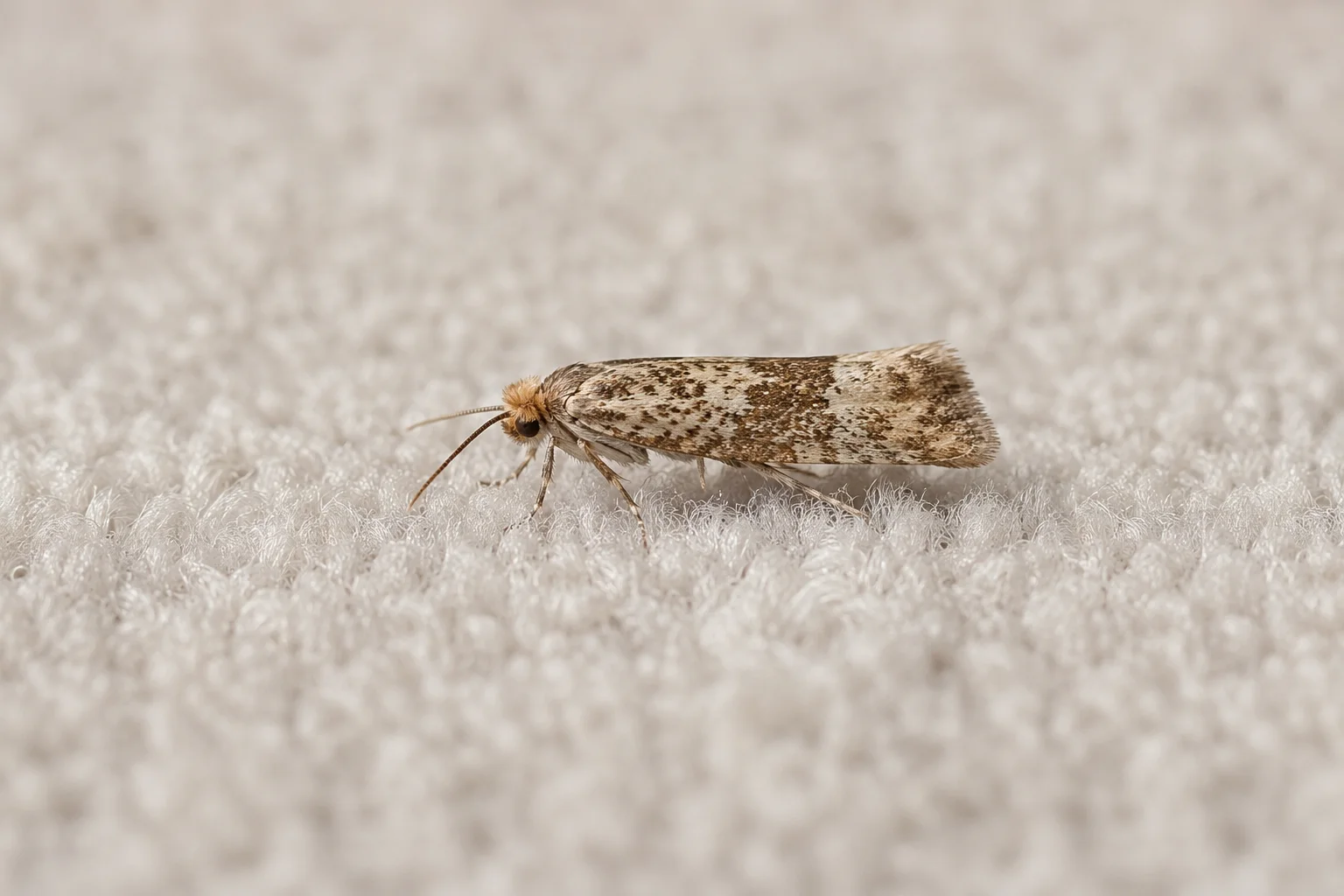
The Case-bearing Clothes Moth is a close relative of the webbing clothes moth and damages the same valuable materials in Dubai wardrobes, storage, and rugs — wool, silk, fur, felt, and other animal fibres — but it has one distinctive habit: the larva builds and carries a portable silken case around itself, dragging this little tube along as it feeds. The damage shows as holes and surface grazing on woollens, carpets, and upholstery, with the small cases visible on or near affected items. Like other clothes moths, it prefers dark, undisturbed spots — closets, drawers, under furniture, and quiet corners — and the weak-flying adults avoid light, so infestations develop unseen in stored textiles. Disturbing one item rarely clears the eggs, larvae, and cases spread through storage.
Santera's Dubai Municipality-certified technicians control Case-bearing Clothes Moths by inspecting and treating infested textiles and dark harbourage, targeting larvae, cases, and eggs, and advising on cleaning, storage, and prevention. For villas, hotels, and premises with valuable textiles, we deliver targeted treatment aligned with Dubai Municipality standards.
Get to know the physical signs and behavioral patterns associated with this species. Knowledge of these specific traits helps in maintaining a secure and pest-free environment.
Santera provides Pest control and prevention across Dubai, with primary service coverage in:

Santera gets rid of Case-bearing Clothes Moths in Dubai with a Dubai Municipality-certified process: our technicians inspect to find the infested textiles and the hidden larvae and entry points, apply targeted treatment that eliminates the problem at its source, and put prevention measures in place so it doesn't come back.
You can try, but DIY rarely solves a Case-bearing Clothes Moth problem in Dubai for good. Shop-bought sprays and home remedies tend to deal with what you can see while missing the larvae and eggs hidden deep in textiles and storage, so the problem returns. Lasting control means targeting the source — which is where professional treatment makes the difference.
Because the source survives. Females lay eggs on suitable natural-fibre materials in dark storage; each larva constructs and enlarges a silken case as it feeds and grows, then pupates within it. Continuous indoor conditions in Dubai support ongoing development, and eggs, larvae, and cases dispersed through storage cause recurrence unless thoroughly treated. That's exactly why surface sprays and one-off DIY fail — they hit what's visible while the source keeps producing more, so lasting control has to target the source, not just the symptoms.
Watch for Case-bearing Clothes Moths themselves and the signs they leave. The adult Case-bearing Clothes Moth is small, with a wingspan of about 12–16mm, and has brownish-grey wings that typically show a few faint darker spots, distinguishing it from the plain golden webbing clothes moth. This moth prefers dark, undisturbed storage where the larvae feed while dragging their portable cases across textiles, leaving holes and grazing. The weak-flying adults avoid light and stay in dim areas, so they're easily overlooked. Catching it early, before numbers build, makes treatment far easier.
Case-bearing Clothes Moths don't bite or harm people, but their larvae damage woollens, carpets, and natural-fibre textiles, leaving holes and grazing.
Case-bearing Clothes Moth larvae feed on natural animal fibres — wool, silk, fur, felt, and feathers — favouring items soiled with sweat or organic matter, while carrying their protective case. Adults do not feed on fabric. In Dubai, stored woollens, silks, carpets, and upholstery are the primary targets of the damaging, case-carrying larvae. Cut off these food, water, and shelter sources and you remove what draws them in — but an established population still needs targeted treatment to clear fully.