24/7 Pest Control in the UAE

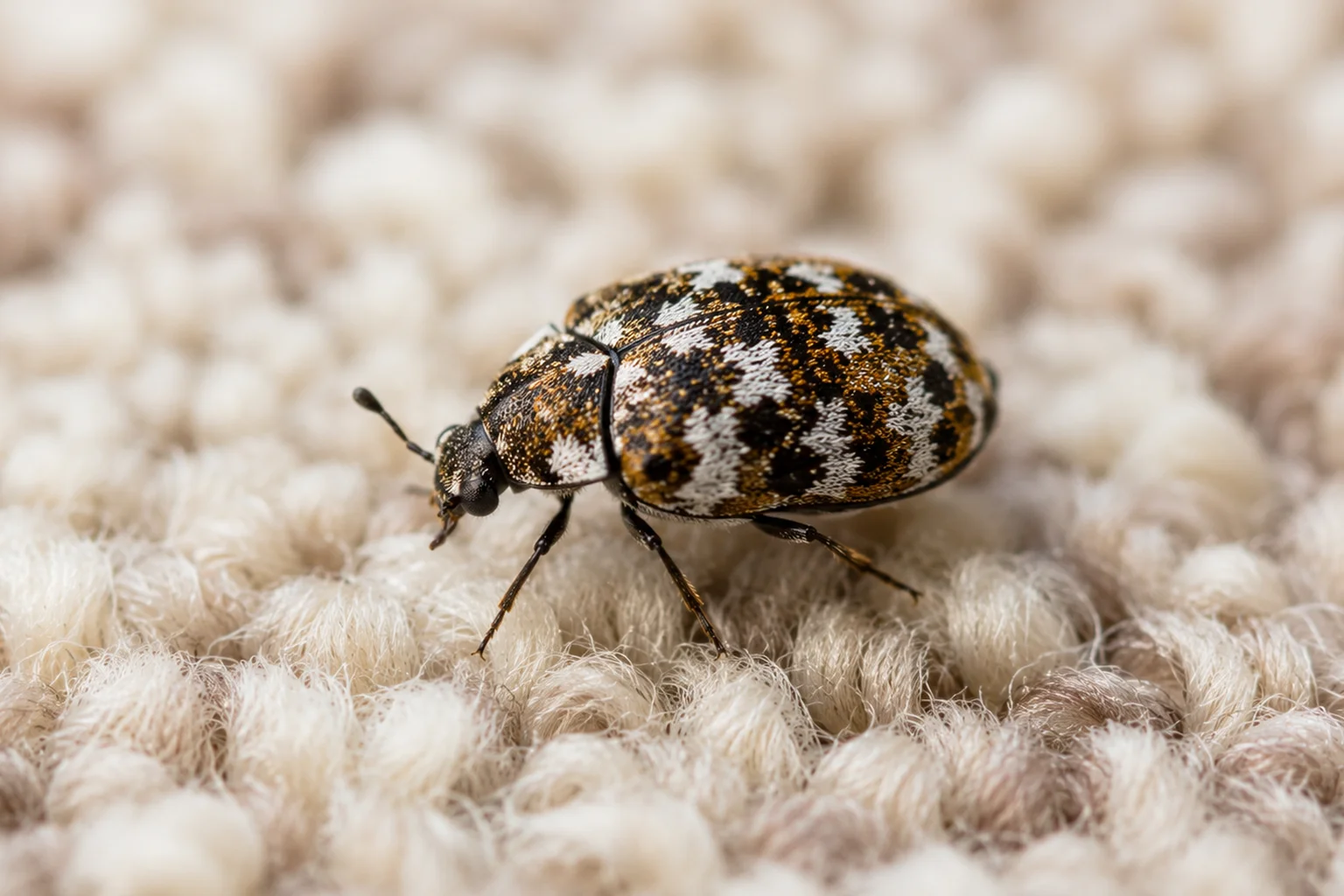
The Carpet Beetle is a stealthy destroyer of natural-fibre textiles in Dubai homes, hotels, and majlis areas. The damage is done by the larvae, which feed on wool carpets and rugs, silk, upholstery, woollen clothing, felt, and other natural materials, leaving irregular holes, thinning, and bare patches — damage often wrongly blamed on clothes moths. They favour dark, undisturbed places: under furniture and rugs, in wardrobes, along skirting, in stored clothing and linens, and in air-duct lint. The small adult beetles fly in from outside (often via windows or on cut flowers) and lay eggs in these quiet spots, so infestations can establish unnoticed until damage appears. Surface vacuuming helps but rarely reaches eggs and larvae deep in carpet backing, stored items, and crevices.
Santera's Dubai Municipality-certified technicians control Carpet Beetles by inspecting and treating infested textiles and harbourage, focusing on the hidden larval feeding sites, and advising on cleaning, storage, and prevention. For villas, hotels, and premises with valuable carpets and textiles, we deliver targeted treatment aligned with Dubai Municipality standards.
Get to know the physical signs and behavioral patterns associated with this species. Knowledge of these specific traits helps in maintaining a secure and pest-free environment.
Santera provides Pest control and prevention across Dubai, with primary service coverage in:

Santera gets rid of Carpet Beetles in Dubai with a Dubai Municipality-certified process: our technicians inspect to find the infested textiles and the hidden larvae and entry points, apply targeted treatment that eliminates the problem at its source, and put prevention measures in place so it doesn't come back.
You can try, but DIY rarely solves a Carpet Beetle problem in Dubai for good. Shop-bought sprays and home remedies tend to deal with what you can see while missing the larvae and eggs hidden deep in textiles and storage, so the problem returns. Lasting control means targeting the source — which is where professional treatment makes the difference.
Because the source survives. Females lay eggs in dark, protected spots close to a larval food source such as carpet backing, stored woollens, or lint accumulations. Larvae develop over an extended period, feeding throughout, before pupating. That's exactly why surface sprays and one-off DIY fail — they hit what's visible while the source keeps producing more, so lasting control has to target the source, not just the symptoms.
Watch for Carpet Beetles themselves and the signs they leave. Adult Carpet Beetles are small, about 2–4mm, rounded or oval, and mottled with patterns of white, brown, yellow, and black scales, sometimes appearing greyish. Carpet Beetle larvae avoid light and live in dark, undisturbed areas — beneath furniture and rugs, in wardrobes, along skirting, in stored textiles, and in ducting lint — where they feed slowly and steadily. Adults are active fliers attracted to light and flowers, entering homes to lay eggs in suitable harbourage. Catching it early, before numbers build, makes treatment far easier.
Carpet Beetles don't bite or harm people, but their larvae destroy wool carpets, rugs, upholstery, and clothing, causing costly damage to natural-fibre textiles.
Carpet Beetle larvae feed on natural fibres and materials of animal origin — wool, silk, fur, felt, leather, and feathers — as well as accumulated lint, pet hair, and dead insects. Adults feed on pollen and nectar outdoors. In Dubai, wool carpets, rugs, upholstery, and stored woollens are prime targets for the destructive larvae. Cut off these food, water, and shelter sources and you remove what draws them in — but an established population still needs targeted treatment to clear fully.