24/7 Pest Control in the UAE

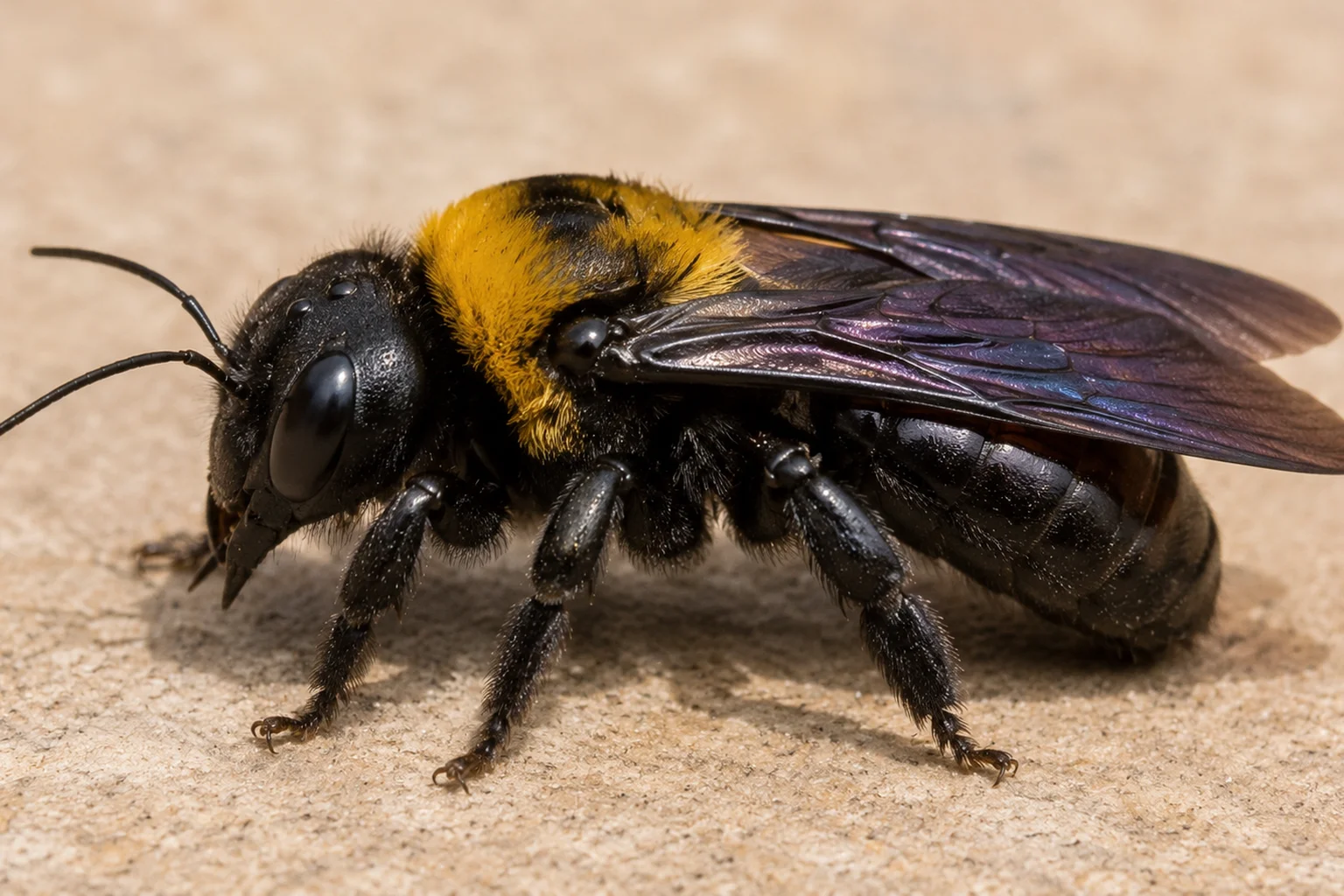
The Carpenter Bee is a large, robust, often loud bee that damages wood by boring into it — and that structural damage, not stinging, is the main concern around Dubai villas and gardens. Females excavate remarkably neat, perfectly round entry holes (about the width of a finger) into untreated or weathered timber — wooden beams, pergolas, fascia boards, fences, decking, and outdoor furniture — then tunnel along the grain to create galleries for their young. A single hole looks minor, but the same timber is reused and extended year after year, and the accumulating tunnels progressively weaken the wood, while woodpeckers and moisture can worsen the damage. The males are territorial and hover aggressively near nests but are harmless and cannot sting; females can sting but are docile and rarely do unless handled. DIY plugging of holes without treatment often traps active bees and doesn't prevent re-infestation.
Santera's Dubai Municipality-certified technicians control Carpenter Bees by treating active galleries, managing the timber, and advising on sealing and protecting wood to prevent recurrence, in line with Dubai Municipality standards. For villas with timber features and outdoor structures, we protect the woodwork while handling the bees safely.
Get to know the physical signs and behavioral patterns associated with this species. Knowledge of these specific traits helps in maintaining a secure and pest-free environment.
Santera provides Pest control and prevention across Dubai, with primary service coverage in:

Santera handles Carpenter Bees in Dubai with a Dubai Municipality-certified, safety-first process: trained technicians locate and deal with the colony (relocating bees where possible) using proper equipment, then advise on prevention so the risk doesn't return. Given the danger, this should never be attempted yourself.
It isn't safe to deal with Carpenter Bees yourself. Attempting to handle or remove them risks the colony, which is dangerous and best not provoked, and DIY methods rarely resolve the underlying problem. The safe, effective route is trained professional response.
Because the source survives. A female Carpenter Bee bores a gallery, partitions it into cells, provisions each with food and an egg, then seals it; the larvae develop within the wood and emerge as adults. Galleries are reused and lengthened year after year, so timber suffers increasing internal tunnelling over time even though individual nests are small. That's exactly why surface sprays and one-off DIY fail — they hit what's visible while the source keeps producing more, so lasting control has to target the source, not just the symptoms.
Watch for Carpenter Bees themselves and the signs they leave. Carpenter Bees are large, about 20–25mm, resembling bumblebees but with a distinctively shiny, hairless, black abdomen (bumblebees are hairy all over). Carpenter Bees are largely solitary rather than forming large social colonies. Females bore into wood to create nesting tunnels, while territorial males hover near nest sites and challenge intruders harmlessly. Catching it early, before numbers build, makes treatment far easier.
Carpenter Bees rarely sting — males can't, and females are docile — so the real concern isn't the sting but the structural damage they do by boring into timber.
Adult Carpenter Bees feed on nectar and pollen from flowers, foraging in Dubai gardens and on flowering plants. They do not eat wood — they bore into it only to create nesting galleries. The females provision each gallery cell with a pollen-and-nectar food store for their developing larvae, but their feeding itself is harmless, beneficial pollination. Cut off these food, water, and shelter sources and you remove what draws them in — but an established population still needs targeted treatment to clear fully.