24/7 Pest Control in the UAE

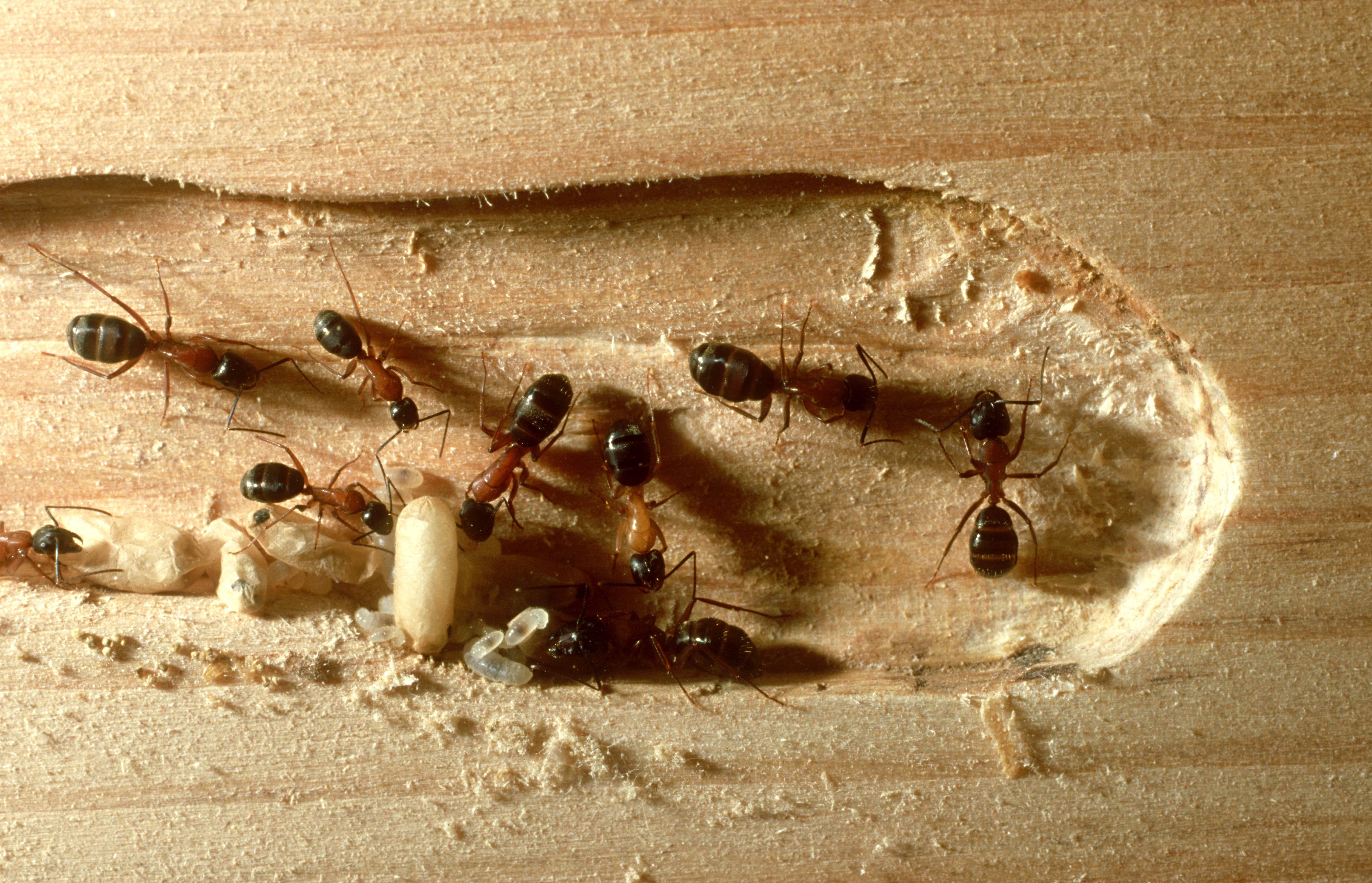
Carpenter Ants are among the largest ants you'll find in a Dubai property, and the most structurally damaging. They tunnel through moist or weakened timber — door frames, skirting, wooden decking, pergolas, and roof timbers — carving smooth galleries to nest in. The first sign is often fine sawdust-like shavings (frass) beneath wood, or faint rustling inside walls at night. DIY sprays kill a handful of foragers but never reach the satellite nests hidden deep in the timber, so the colony keeps expanding and the damage keeps growing.
Santera's Dubai Municipality-certified technicians trace activity back to the parent and satellite nests, then apply targeted bait and direct treatment into the galleries to eliminate the colony at source. We also identify and flag the moisture problems that attracted them — leaks, damp timber, poor ventilation — so the issue doesn't return. For villas, hotels, and properties with significant timber, this protect-the-structure approach is essential.
Get to know the physical signs and behavioral patterns associated with this species. Knowledge of these specific traits helps in maintaining a secure and pest-free environment.
Santera provides Pest control and prevention across Dubai, with primary service coverage in:

Santera gets rid of Carpenter Antses in Dubai with a Dubai Municipality-certified process: our technicians inspect to find the colony and entry points, apply targeted treatment that eliminates the problem at its source, and put prevention measures in place so it doesn't come back. For restaurants, hotels, and food businesses, all work follows HACCP protocols and Dubai Municipality standards.
You can try, but DIY rarely solves a Carpenter Ants problem in Dubai for good. Shop-bought sprays and home remedies tend to deal with what you can see while missing the colony hidden underground or in wall voids, so the problem returns. Lasting control means targeting the source — which is where professional treatment makes the difference.
Because the source survives. Colonies are founded by a single queen and grow slowly, taking a couple of years to mature. Once established, the parent colony produces satellite nests nearby, expanding the colony's reach. That's exactly why surface sprays and one-off DIY fail — they hit what's visible while the source keeps producing more, so lasting control has to target the source, not just the symptoms.
Watch for Carpenter Antses themselves and the signs they leave. Carpenter Ants are large, measuring 6–12mm, making them among the biggest ants in the region. Carpenter Ants excavate smooth galleries inside moist or decaying timber to build their nests, pushing out sawdust-like frass that's often the first visible clue. They are most active at night and travel established trails, sometimes over long distances between a main nest and satellite nests. Catching it early, before numbers build, makes treatment far easier.
Carpenter Ants can bite if disturbed, but the real danger is to your property — they tunnel through damp or damaged timber, weakening structural wood, door frames, and pool surrounds over time.
Despite nesting in wood, Carpenter Ants do not eat it — they feed on proteins and sugars. Outdoors they consume honeydew from aphids, other insects, and plant juices. Indoors they are drawn to sweets, meats, pet food, and grease. In Dubai homes they often forage at night, following trails between an outdoor nest and indoor food sources. Cut off these food, water, and shelter sources and you remove what draws them in — but an established population still needs targeted treatment to clear fully.