24/7 Pest Control in the UAE

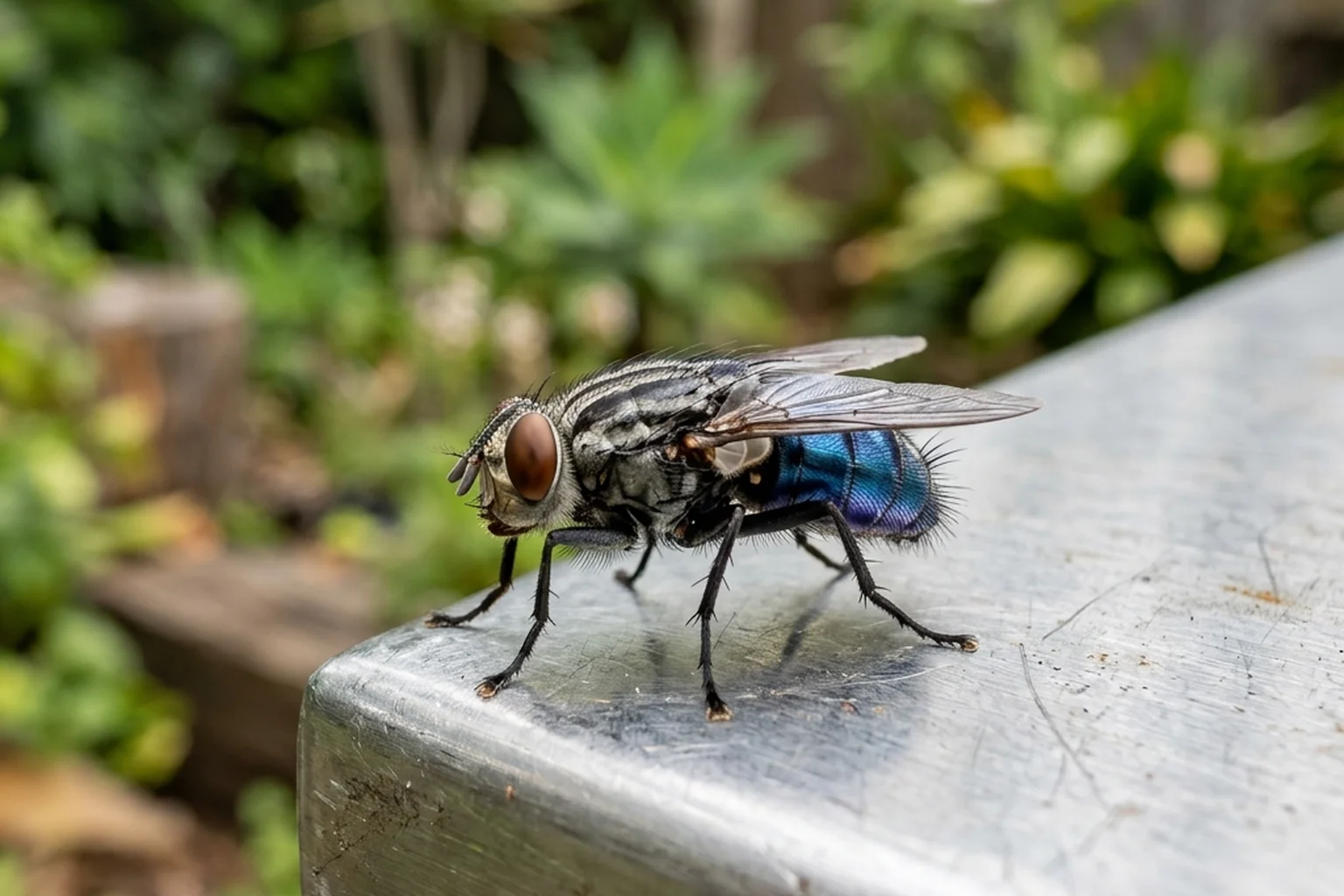
The Blue Bottle Fly is a large, noisy, metallic-blue fly attracted to decaying protein — rotting meat, fish, carcasses, and food waste. Its distinctive loud buzzing and shiny blue body make it easy to recognise, and its sudden appearance indoors is often a clue that something is decomposing nearby: spoiled food, an overflowing bin, or a dead animal trapped in a void or ceiling. In Dubai's kitchens, supermarkets, garbage rooms, and restaurants, blue bottle flies are a serious contamination concern because they move directly from decaying matter and waste onto food and surfaces, carrying bacteria with them.
Santera's Dubai Municipality-certified technicians control Blue Bottle Flies by locating and removing or treating the decaying source (including hidden carcasses), improving waste hygiene, installing and servicing fly-control units, and applying targeted treatment. For F&B and food-handling premises, this forms part of a documented fly-management programme aligned with HACCP and Dubai Municipality standards.
Get to know the physical signs and behavioral patterns associated with this species. Knowledge of these specific traits helps in maintaining a secure and pest-free environment.
Santera provides Pest control and prevention across Dubai, with primary service coverage in:

Santera gets rid of Blue Bottle Flies in Dubai with a Dubai Municipality-certified process: our technicians inspect to find the breeding source and entry points, apply targeted treatment that eliminates the problem at its source, and put prevention measures in place so it doesn't come back. For restaurants, hotels, and food businesses, all work follows HACCP protocols and Dubai Municipality standards.
You can try, but DIY rarely solves a Blue Bottle Fly problem in Dubai for good. Shop-bought sprays and home remedies tend to deal with what you can see while missing the breeding source in drains, waste, or decaying matter, so the problem returns. Lasting control means targeting the source — which is where professional treatment makes the difference.
Because the source survives. Females lay batches of eggs (up to several hundred) on decaying protein and carcasses; maggots hatch within a day or so and develop rapidly in Dubai's warmth, completing the cycle in one to a few weeks. This fast development means decaying matter can quickly generate large numbers of flies. That's exactly why surface sprays and one-off DIY fail — they hit what's visible while the source keeps producing more, so lasting control has to target the source, not just the symptoms.
Watch for Blue Bottle Flies themselves and the signs they leave. Blue Bottle Flies are large, about 8–12mm, with a brilliant metallic-blue, shiny abdomen and a greyish thorax. Blue Bottle Flies are active by day and are strong, fast fliers that can detect decaying matter from a distance. They enter buildings drawn by the odour of decomposition or food, and their persistent indoor presence often points to a hidden dead animal or spoiled protein source. Catching it early, before numbers build, makes treatment far easier.
Blue Bottle Flies don't bite, but they breed in decaying meat and waste and carry that contamination onto food and surfaces, posing a significant hygiene risk.
Blue Bottle Flies are strongly attracted to decaying protein — rotting meat, fish, carcasses — as well as food waste, refuse, and organic matter. The larvae (maggots) develop in this decaying material. Adults also feed on sugary substances and food residue, moving between decay and food and spreading contamination in the process. Cut off these food, water, and shelter sources and you remove what draws them in — but an established population still needs targeted treatment to clear fully.