24/7 Pest Control in the UAE

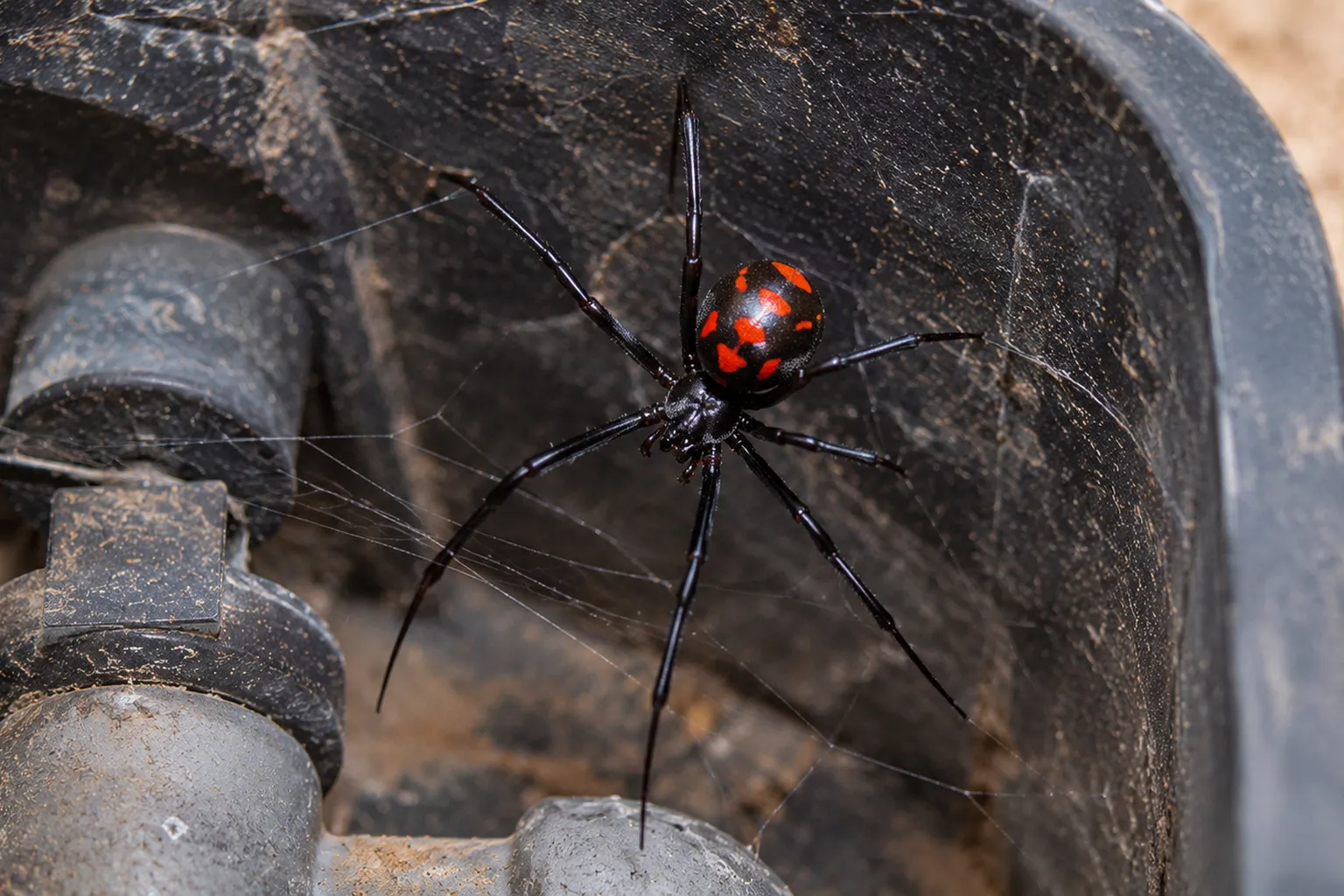
The Black Widow is the spider Dubai residents need to take seriously. Its venom is neurotoxic and a bite can cause intense pain, muscle cramps, sweating, and other systemic symptoms requiring medical attention, with children and the elderly most at risk. It is shy and not aggressive — bites happen when the spider is accidentally pressed against skin — but its preferred hiding spots put it in contact with people: dark, undisturbed corners of garages, storerooms, garden walls, under outdoor furniture, in woodpiles, and around utility boxes. It builds a strong, irregular web close to the ground. The danger lies in reaching blindly into these spaces. DIY spraying scatters them and misses egg sacs, allowing the population to persist.
Santera's Dubai Municipality-certified technicians treat Black Widows by inspecting and treating harbourage areas, removing webs and egg sacs, and applying targeted residual treatment, combined with advice to reduce hiding spots. For villas, compounds, and facilities, we prioritise safe, thorough control in line with Dubai Municipality standards.
Get to know the physical signs and behavioral patterns associated with this species. Knowledge of these specific traits helps in maintaining a secure and pest-free environment.
Santera provides Pest control and prevention across Dubai, with primary service coverage in:

Santera gets rid of Black Widows in Dubai with a Dubai Municipality-certified process: our technicians inspect to find the harbourage and egg sacs and entry points, apply targeted treatment that eliminates the problem at its source, and put prevention measures in place so it doesn't come back.
You can try, but DIY rarely solves a Black Widow problem in Dubai for good. Shop-bought sprays and home remedies tend to deal with what you can see while missing the egg sacs and harbourage that keep the population going, so the problem returns. Lasting control means targeting the source — which is where professional treatment makes the difference.
Because the source survives. Female Black Widows produce rounded, papery egg sacs containing many eggs, guarding them in the web; numerous spiderlings emerge and disperse. A single egg sac can seed a local population, which is why removing egg sacs during treatment is essential to prevent recurrence around a property. That's exactly why surface sprays and one-off DIY fail — they hit what's visible while the source keeps producing more, so lasting control has to target the source, not just the symptoms.
Watch for Black Widows themselves and the signs they leave. The Black Widow is a medium-sized spider with a glossy black, globular abdomen, and females (the dangerous sex) often show red or orange markings, classically an hourglass shape on the underside, though regional species may have a row of red spots. Black Widows are shy, nocturnal, and reclusive, building irregular tangled webs in dark, sheltered, low spots — garages, stores, wall cavities, under furniture, in woodpiles, and around utility fittings. They rarely leave the web and bite only defensively when trapped against skin. Catching it early, before numbers build, makes treatment far easier.
Yes — the Black Widow is the most medically significant spider in the region; its neurotoxic venom can cause severe pain and systemic symptoms, and bites need medical attention, particularly in children.
Black Widows feed on insects and other invertebrates caught in their strong webs — including beetles, cockroaches, and other spiders. In Dubai, areas with abundant insect prey around lighting, garages, and gardens attract them, so controlling other pests reduces the food source that draws widows to a property. Cut off these food, water, and shelter sources and you remove what draws them in — but an established population still needs targeted treatment to clear fully.