24/7 Pest Control in the UAE

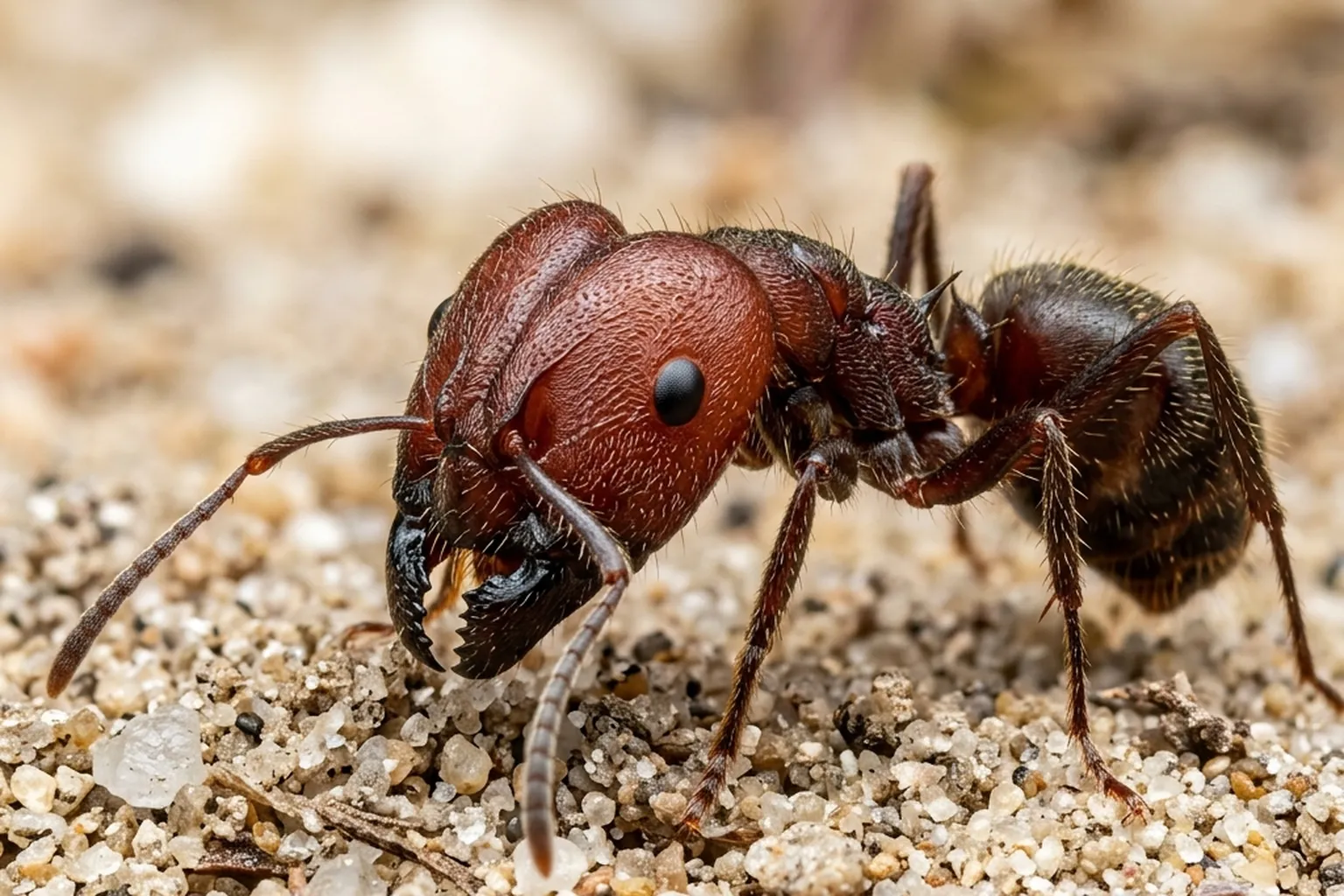
In Dubai's irrigated villa gardens — from Arabian Ranches to Al Barari to Emirates Hills — the Big-headed Ant builds year-round. Its supercolonies contain hundreds of queens spread across an underground network that can extend across an entire garden in a single season. The damage isn't only on the surface: these ants tunnel beneath paving slabs and walkways, eroding the soil until stones crack and sink. They also farm aphids and scale insects on ornamental plants, accelerating landscaping damage. Surface sprays kill the foragers you see; the queens survive and the colony rebuilds within days.
Santera's Dubai Municipality-certified technicians begin every treatment by mapping active nests and the underground network across your property. We apply slow-acting granular bait that workers carry directly to the queens, triggering complete colony collapse from within, then apply a residual barrier around your foundation, perimeter, and pool deck to prevent re-establishment. For F&B operators, hotels, and commercial properties, all treatments follow HACCP and Dubai Municipality standards.
Get to know the physical signs and behavioral patterns associated with this species. Knowledge of these specific traits helps in maintaining a secure and pest-free environment.
Santera provides Pest control and prevention across Dubai, with primary service coverage in:

Santera gets rid of Big-headed Antses in Dubai with a Dubai Municipality-certified process: our technicians inspect to find the colony and entry points, apply targeted treatment that eliminates the problem at its source, and put prevention measures in place so it doesn't come back. For restaurants, hotels, and food businesses, all work follows HACCP protocols and Dubai Municipality standards.
You can try, but DIY rarely solves a Big-headed Ants problem in Dubai for good. Shop-bought sprays and home remedies tend to deal with what you can see while missing the colony hidden underground or in wall voids, so the problem returns. Lasting control means targeting the source — which is where professional treatment makes the difference.
Because the source survives. Colonies are highly polygynous, containing hundreds of queens. They rarely swarm; instead they reproduce by budding, where workers and a fertile queen split off to form nearby satellite nests. That's exactly why surface sprays and one-off DIY fail — they hit what's visible while the source keeps producing more, so lasting control has to target the source, not just the symptoms.
Watch for Big-headed Antses themselves and the signs they leave. Big-headed Ant colonies contain two distinct worker types. Ground-nesting and territorial, Big-headed Ants establish shallow nests in loose soil, beneath turf, under paving, and along tree root lines. Their tunnelling beneath concrete is a structural concern — pavers sink and joints crack over time. Catching it early, before numbers build, makes treatment far easier.
Big-headed Ants don't sting or pose a health threat, but they invade kitchens and gardens in huge numbers and can displace other species, making them a persistent nuisance.
Big-headed Ants are highly omnivorous. Minor workers forage for seeds, dead insects, proteins, and honeydew from aphids and scale insects, which they protect and farm on ornamental plants in villa gardens. They are equally drawn to protein-rich food debris on outdoor restaurant terraces and poolside dining areas, and to grease and sweet residues around outdoor kitchens. Cut off these food, water, and shelter sources and you remove what draws them in — but an established population still needs targeted treatment to clear fully.