24/7 Pest Control in the UAE

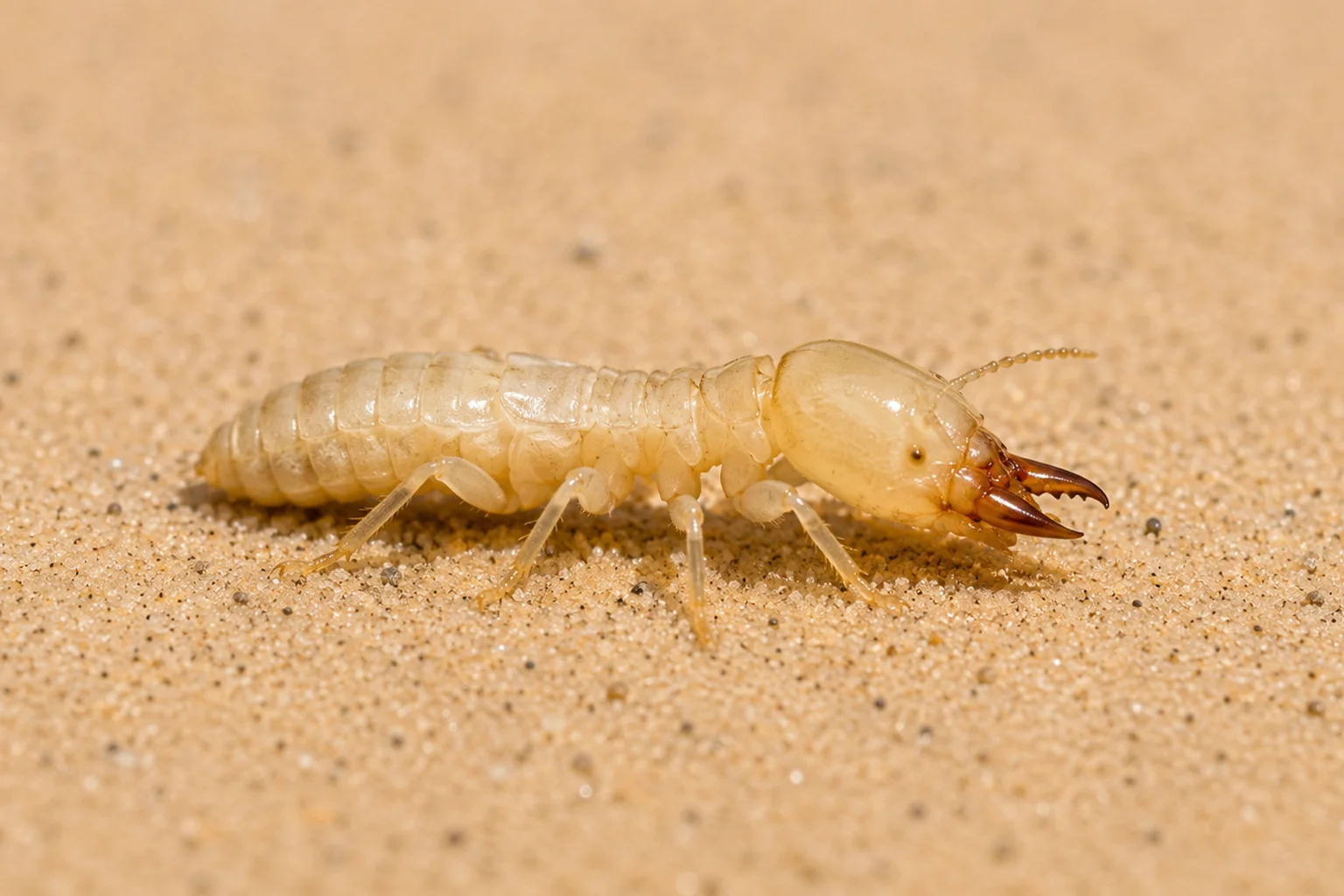
The Arabian Sand Termite is built for Dubai. This desert-adapted subterranean species survives in arid, sandy conditions and attacks wood and cellulose materials in contact with soil — fencing, timber, door frames, buried structures, and landscaping elements around villas and developments. It tunnels unseen through soil and sand, reaching structures from below, which is why infestations are usually advanced before any visible damage appears. DIY treatments only address what's visible on the surface and never reach the colony working underground.
Santera's Dubai Municipality-certified technicians treat the Arabian Sand Termite with soil-applied termiticide barriers and targeted colony treatments that interrupt the underground network feeding on your property. We assess soil contact points, structural timber, and conducive conditions, then build a protection programme suited to Dubai's sandy terrain. For villa communities and developers, we provide pre-construction and post-construction soil treatment in line with Dubai Municipality requirements.
Get to know the physical signs and behavioral patterns associated with this species. Knowledge of these specific traits helps in maintaining a secure and pest-free environment.
Santera provides Pest control and prevention across Dubai, with primary service coverage in:

Santera gets rid of Arabian Sand Termites in Dubai with a Dubai Municipality-certified process: our technicians inspect to find the colony and entry points, apply targeted treatment that eliminates the problem at its source, and put prevention measures in place so it doesn't come back.
You can try, but DIY rarely solves a Arabian Sand Termite problem in Dubai for good. Shop-bought sprays and home remedies tend to deal with what you can see while missing the colony hidden in the soil or inside the timber, so the problem returns. Lasting control means targeting the source — which is where professional treatment makes the difference.
Because the source survives. Colonies are headed by a queen and king and contain workers, soldiers, and reproductives. Winged alates swarm to establish new colonies, after which pairs found nests in suitable soil. That's exactly why surface sprays and one-off DIY fail — they hit what's visible while the source keeps producing more, so lasting control has to target the source, not just the symptoms.
Watch for Arabian Sand Termites themselves and the signs they leave. Arabian Sand Termites are small, pale, soft-bodied insects living in caste-based colonies. Subterranean and desert-adapted, Arabian Sand Termites build extensive tunnel networks through soil and sand to reach food sources, protecting themselves from heat and predators. They work hidden underground and inside timber, often leaving a thin intact outer surface over hollowed wood. Catching it early, before numbers build, makes treatment far easier.
Termites don't bite or harm people, but they cause serious structural damage — silently consuming timber and weakening your property long before damage becomes visible, making them one of the most costly pests in Dubai.
Arabian Sand Termites feed on cellulose — wood, timber, cardboard, paper, and plant material — especially where it contacts soil. In Dubai they target fencing, buried and ground-contact timber, door frames, and landscaping wood around villas and desert-edge developments, consuming material from the inside out. Cut off these food, water, and shelter sources and you remove what draws them in — but an established population still needs targeted treatment to clear fully.