How Do I Get Rid of Pest in Dubai?

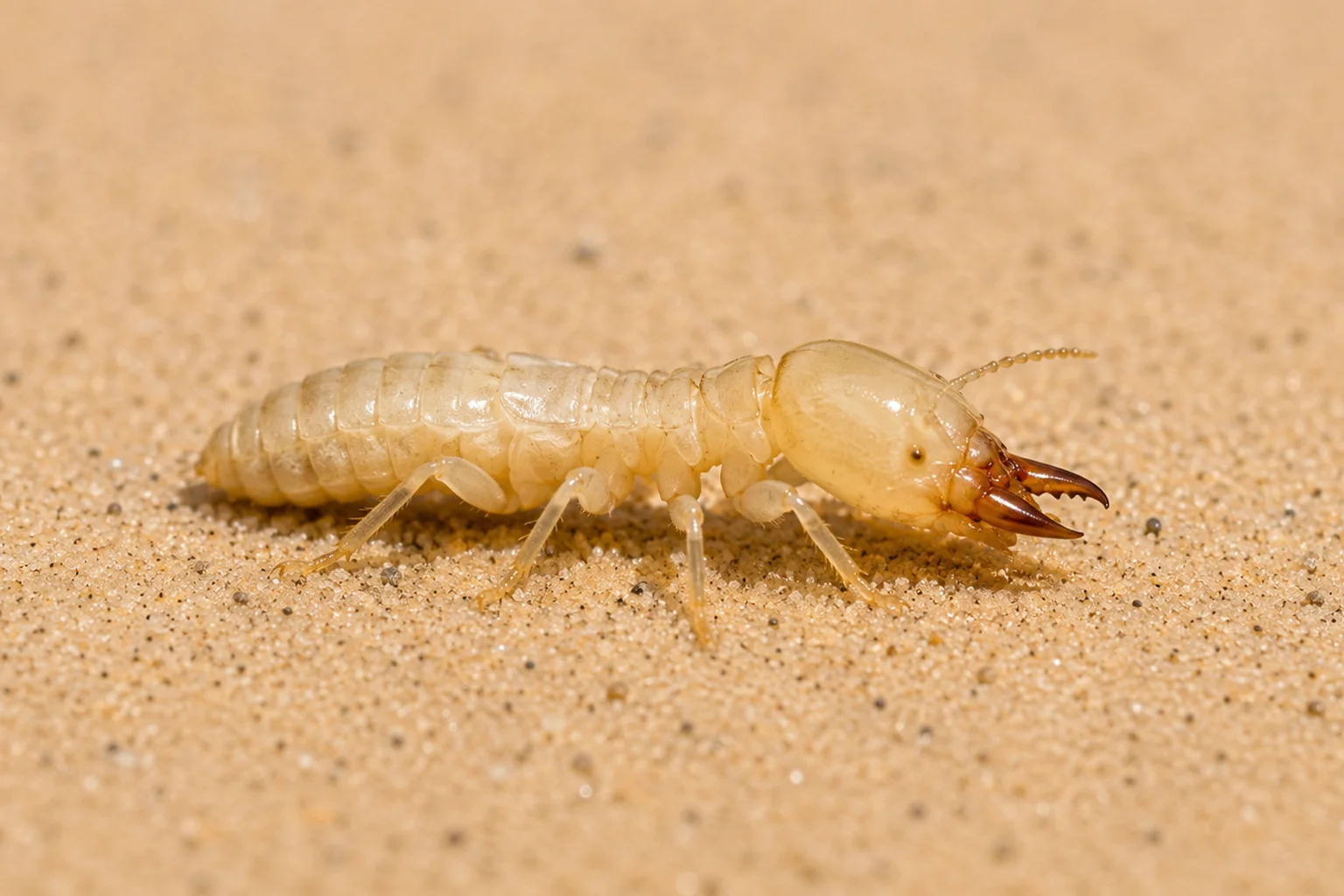
The Arabian Sand Termite is built for Dubai. This desert-adapted subterranean species survives in arid, sandy conditions and attacks wood and cellulose materials in contact with soil — fencing, timber, door frames, buried structures, and landscaping elements around villas and developments. It tunnels unseen through soil and sand, reaching structures from below, which is why infestations are usually advanced before any visible damage appears. DIY treatments only address what's visible on the surface and never reach the colony working underground.

Santera's Dubai Municipality-certified technicians treat the Arabian Sand Termite with soil-applied termiticide barriers and targeted colony treatments that interrupt the underground network feeding on your property. We assess soil contact points, structural timber, and conducive conditions, then build a protection programme suited to Dubai's sandy terrain. For villa communities and developers, we provide pre-construction and post-construction soil treatment in line with Dubai Municipality requirements.

Book Your Free Inspection

Species Insights & Biology

Get to know the physical signs and behavioral patterns associated with this species. Knowledge of these specific traits helps in maintaining a secure and pest-free environment.

Appearance

Arabian Sand Termites are small, pale, soft-bodied insects living in caste-based colonies. Workers are creamy-white and blind; soldiers have larger, darker heads with strong mandibles; and winged reproductives (alates) are darker and emerge to swarm. Like all subterranean termites, the workers that cause damage stay hidden in soil and tunnels, rarely seen in the open.

Diet

Arabian Sand Termites feed on cellulose — wood, timber, cardboard, paper, and plant material — especially where it contacts soil. In Dubai they target fencing, buried and ground-contact timber, door frames, and landscaping wood around villas and desert-edge developments, consuming material from the inside out.

Behavior

Subterranean and desert-adapted, Arabian Sand Termites build extensive tunnel networks through soil and sand to reach food sources, protecting themselves from heat and predators. They work hidden underground and inside timber, often leaving a thin intact outer surface over hollowed wood. Their ability to survive arid conditions makes them a persistent threat across Dubai's sandy terrain.

Reproduction

Colonies are headed by a queen and king and contain workers, soldiers, and reproductives. Winged alates swarm to establish new colonies, after which pairs found nests in suitable soil. Mature colonies can be large and long-lived, continuously sending workers to forage for cellulose across a property.

Prevention Tips

Keep timber, fencing, and wooden structures from direct soil contact where possible, and use treated materials. Reduce moisture around foundations and fix leaks that attract termites. Remove buried wood, cardboard, and cellulose debris near structures. Inspect ground-contact timber and fencing regularly. For reliable protection on Dubai's sandy soils, arrange a Santera soil-barrier assessment — pre-construction treatment is far cheaper than repairing structural damage later.

Where We Treat Pest in Dubai

Santera provides Pest control and prevention across Dubai, with primary service coverage in:

place
Al Nahda
place
Al Qusais
place
Nad Al Sheba
place
Al Rashidiya
place
Al Warqa
place
Al Jaddaf
place
Al Satwa
place
Oud Metha
place
Al Karama
place
Bur Dubai
place
Deira
place
Al Sufouh
place
Umm Suqeim
place
Jumeirah
place
Victory Heights
place
Motor City
place
Mirdif
place
Meadows
place
Springs
place
JVT
place
Al Barsha
place
JLT
place
Dubai Marina
place
Business Bay
place
Deira
place
Ras Al Khor
place
Al Jaddaf
place
Mina Rashid
place
Dubai Festival City
place
Dubai World Trade Centre
place
Dubai Harbour
place
Dubai Studio City
place
Dubai Knowledge Park
place
Dubai Design District (d3)
place
Barsha Heights
place
Dubai Creek Harbour
place
Dubai Hills
place
MBR City
place
Dubai South
place
Expo City
Arabian Sand Termite

Common Questions & Expert Answers

Book Your Free Inspection
How does Santera get rid of Arabian Sand Termites in Dubai?

Santera gets rid of Arabian Sand Termites in Dubai with a Dubai Municipality-certified process: our technicians inspect to find the colony and entry points, apply targeted treatment that eliminates the problem at its source, and put prevention measures in place so it doesn't come back.

Can I get rid of Arabian Sand Termites myself, or do I need professional pest control?

You can try, but DIY rarely solves a Arabian Sand Termite problem in Dubai for good. Shop-bought sprays and home remedies tend to deal with what you can see while missing the colony hidden in the soil or inside the timber, so the problem returns. Lasting control means targeting the source — which is where professional treatment makes the difference.

Why do Arabian Sand Termites keep coming back after I treat them?

Because the source survives. Colonies are headed by a queen and king and contain workers, soldiers, and reproductives. Winged alates swarm to establish new colonies, after which pairs found nests in suitable soil. That's exactly why surface sprays and one-off DIY fail — they hit what's visible while the source keeps producing more, so lasting control has to target the source, not just the symptoms.

How do I know if I have a Arabian Sand Termite problem in Dubai?

Watch for Arabian Sand Termites themselves and the signs they leave. Arabian Sand Termites are small, pale, soft-bodied insects living in caste-based colonies. Subterranean and desert-adapted, Arabian Sand Termites build extensive tunnel networks through soil and sand to reach food sources, protecting themselves from heat and predators. They work hidden underground and inside timber, often leaving a thin intact outer surface over hollowed wood. Catching it early, before numbers build, makes treatment far easier.

Are Arabian Sand Termites dangerous?

Termites don't bite or harm people, but they cause serious structural damage — silently consuming timber and weakening your property long before damage becomes visible, making them one of the most costly pests in Dubai.

What attracts Arabian Sand Termites to homes and businesses in Dubai?

Arabian Sand Termites feed on cellulose — wood, timber, cardboard, paper, and plant material — especially where it contacts soil. In Dubai they target fencing, buried and ground-contact timber, door frames, and landscaping wood around villas and desert-edge developments, consuming material from the inside out. Cut off these food, water, and shelter sources and you remove what draws them in — but an established population still needs targeted treatment to clear fully.

Experience Guaranteed Results and Satisfied Pest Treatment Services

20+

Years Experience

All

Across UAE

10k+

Treatments

Select a Service

What pest problem can we help you with?

Property Details

Tell us about your property

Choose Date & Time

When would you like us to visit?

Contact Information

How can we reach you?

Expert Help is on the Way!

We’ve received your request. Santera is ready to protect your home/business—talk to you soon!
Oops! Something went wrong while submitting the form.