24/7 Pest Control in the UAE

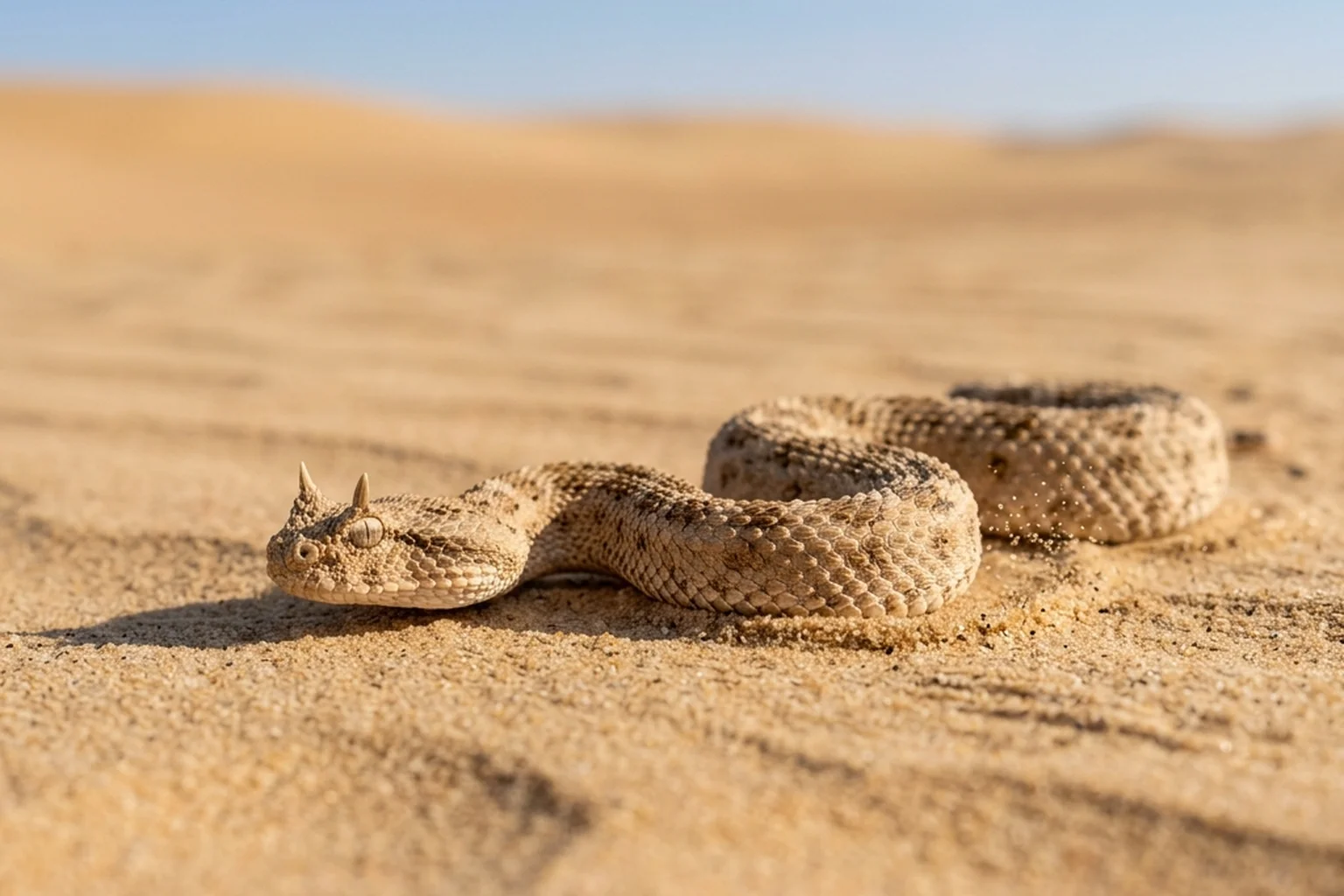
The Arabian Horned Viper is a venomous desert-adapted snake, distinctive for the horn-like scales above each eye (though not all individuals have them). It's a master of camouflage and ambush: it shuffles its body sideways to bury itself in loose sand, leaving only the eyes and head exposed, then waits for prey. This sand-burying habit is exactly what makes it dangerous around desert-edge Dubai villas, gardens, and compounds — a buried snake is almost invisible, and people or pets can step close without realising. It moves by sidewinding across sand and will strike defensively if threatened. Its venom is medically significant, so any encounter should be treated seriously and handled by professionals.
Santera's Dubai Municipality-certified technicians carry out safe snake removal and relocation with proper equipment and trained handling, followed by advice on habitat reduction and proofing to lower the chance of return. For desert-adjacent villas, compounds, and facilities, we provide prompt emergency response in line with Dubai Municipality and wildlife-handling standards.
Get to know the physical signs and behavioral patterns associated with this species. Knowledge of these specific traits helps in maintaining a secure and pest-free environment.
Santera provides Pest control and prevention across Dubai, with primary service coverage in:

Santera handles Arabian Horned Vipers in Dubai with a Dubai Municipality-certified, safety-first process: trained technicians locate and deal with the snake itself, safely using proper equipment, then advise on prevention so the risk doesn't return. Given the danger, this should never be attempted yourself.
It isn't safe to deal with Arabian Horned Vipers yourself. Attempting to handle or remove them risks the risk of handling a snake yourself, and DIY methods rarely resolve the underlying problem. The safe, effective route is trained professional response.
Because the source survives. The Arabian Horned Viper typically lays eggs, with females depositing a clutch in sheltered sandy locations; the young are venomous on hatching. Presence of adults around a desert-adjacent property indicates suitable habitat and prey, warranting professional assessment and removal rather than waiting. That's exactly why surface sprays and one-off DIY fail — they hit what's visible while the source keeps producing more, so lasting control has to target the source, not just the symptoms.
Watch for Arabian Horned Vipers themselves and the signs they leave. The Arabian Horned Viper is a small to medium snake, usually 30–60cm, with a stout, flattened body and a triangular head. This viper is nocturnal and crepuscular, sheltering by day buried in sand or under cover and hunting by ambush at night. It moves by sidewinding and buries itself to wait for prey or to hide, making it extremely hard to detect. Catching it early, before numbers build, makes treatment far easier.
Yes — the Arabian Horned Viper is venomous and its bite is medically significant. Treat any sighting as serious, keep well clear, and call professionals.
The Arabian Horned Viper preys on small desert animals — lizards, small rodents, and large insects — using ambush from its buried position. In Dubai, properties at the desert edge that attract rodents and lizards can draw these vipers, so managing prey around the property helps reduce encounters. Cut off these food, water, and shelter sources and you remove what draws them in — but an established population still needs targeted treatment to clear fully.