How Do I Get Rid of Pest in Dubai?

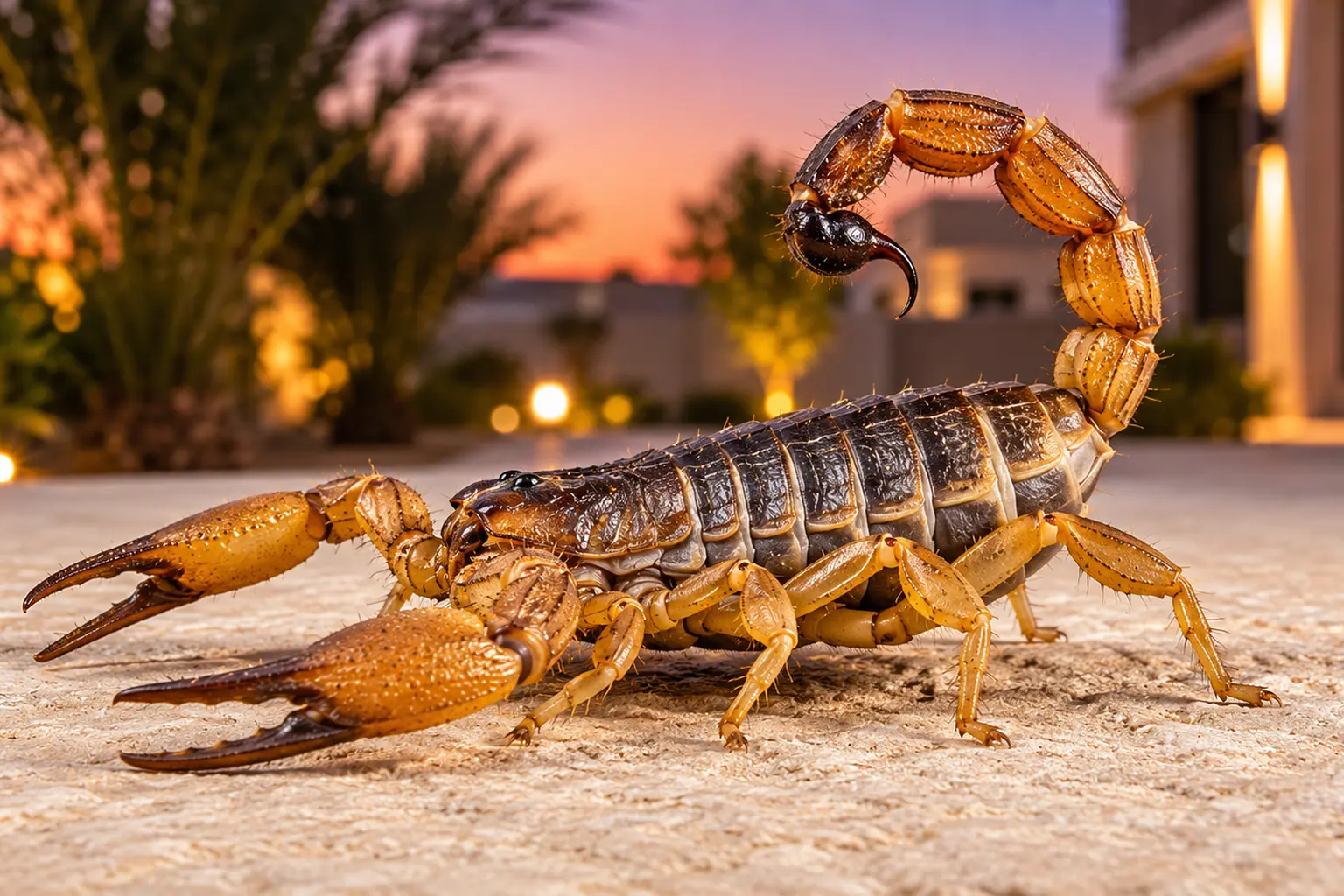
The Arabian Fat-tailed Scorpion is the most medically significant scorpion in the region and among the most venomous in the world. Its thick, powerful tail delivers a potent neurotoxic venom that can cause severe systemic effects and, particularly in children, the elderly, and those with health conditions, can be life-threatening — every sting should be treated as a medical emergency. It shelters by day in dark, sheltered spots around Dubai properties: under rocks and rubble, in wall cavities and crevices, in garages, stores, and garden landscaping, especially at the desert edge. At night it emerges to hunt. Stings typically occur when it's accidentally disturbed or trodden on, or when people move objects it's hiding under. DIY control is hazardous given the venom.

Santera's Dubai Municipality-certified technicians control Fat-tailed Scorpions through careful inspection (including UV detection), targeted treatment of harbourage, and habitat and entry-point reduction, alongside control of the insect prey that attracts them. For villas, compounds, and desert-edge facilities, we provide prompt, safe response in line with Dubai Municipality standards.

Book Your Free Inspection

Species Insights & Biology

Get to know the physical signs and behavioral patterns associated with this species. Knowledge of these specific traits helps in maintaining a secure and pest-free environment.

Appearance

The Arabian Fat-tailed Scorpion is large, typically 8–12cm, and most recognisable by its thick, robust tail (metasoma) — noticeably broader than the slender tails of less dangerous scorpions. It ranges from dark brown to black or reddish-brown, with strong pincers and a powerful stinger. The combination of large size, dark colour, and a heavy fat tail is the key warning sign.

Diet

The Arabian Fat-tailed Scorpion preys on insects and other invertebrates — including cockroaches, crickets, beetles, and spiders — and occasionally small animals, seizing them with its pincers and subduing them with venom. In Dubai, properties with abundant insect prey attract scorpions, so controlling insects is an important part of reducing scorpion presence.

Behavior

This scorpion is nocturnal, sheltering by day under rocks, rubble, in crevices, wall cavities, garages, and garden features, and emerging at night to hunt. It is defensive and will sting readily if disturbed or threatened. Its habit of hiding in objects and spaces people reach into or move — and of sheltering near buildings at the desert edge — is the main cause of dangerous stings.

Reproduction

Scorpions bear live young, which the female carries on her back until they are ready to disperse. They are long-lived and slow to mature. The presence of adults and young around a property indicates suitable harbourage and prey, warranting professional control rather than waiting, given the severe sting risk.

Prevention Tips

Clear rocks, rubble, woodpiles, and debris around the property, and seal cracks, wall cavities, and gaps under doors and gates where scorpions shelter and enter. Control insect prey to remove their food source. Use caution and gloves when moving objects in garages and gardens, and shake out shoes and items left outdoors. Given the life-threatening venom, never handle a scorpion — call Santera immediately for safe inspection (including UV detection) and treatment.

Where We Treat Pest in Dubai

Santera provides Pest control and prevention across Dubai, with primary service coverage in:

place
Al Nahda
place
Al Qusais
place
Nad Al Sheba
place
Al Rashidiya
place
Al Warqa
place
Al Jaddaf
place
Al Satwa
place
Oud Metha
place
Al Karama
place
Bur Dubai
place
Deira
place
Al Sufouh
place
Umm Suqeim
place
Jumeirah
place
Victory Heights
place
Motor City
place
Mirdif
place
Meadows
place
Springs
place
JVT
place
Warehouse Gym
place
Embody
place
F45
place
Barry's
place
GymNation
place
Fitness First
place
DIP
place
Dubai Production City
place
Aster Clinics
place
Mediclor
place
American Hospital
place
Mediclinic
place
Dubai Healthcare City
place
Dubai College
place
Repton
place
Dubai British School
place
GEMS Schools
place
Dubai American Academy
place
Mercato
place
BoxPark
Arabian Fat-tailed Scorpion

Common Questions & Expert Answers

Book Your Free Inspection
How does Santera get rid of Arabian Fat-tailed Scorpions in Dubai?

Santera handles Arabian Fat-tailed Scorpions in Dubai with a Dubai Municipality-certified, safety-first process: trained technicians locate and deal with the harbourage (using UV detection) using proper equipment, then advise on prevention so the risk doesn't return. Given the danger, this should never be attempted yourself.

Can I get rid of Arabian Fat-tailed Scorpions myself, or do I need professional pest control?

It isn't safe to deal with Arabian Fat-tailed Scorpions yourself. Attempting to handle or remove them risks the harbourage and the risk of handling a venomous scorpion, and DIY methods rarely resolve the underlying problem. The safe, effective route is trained professional response.

Why do Arabian Fat-tailed Scorpions keep coming back after I treat them?

Because the source survives. Scorpions bear live young, which the female carries on her back until they are ready to disperse. They are long-lived and slow to mature. That's exactly why surface sprays and one-off DIY fail — they hit what's visible while the source keeps producing more, so lasting control has to target the source, not just the symptoms.

How do I know if I have a Arabian Fat-tailed Scorpion problem in Dubai?

Watch for Arabian Fat-tailed Scorpions themselves and the signs they leave. The Arabian Fat-tailed Scorpion is large, typically 8–12cm, and most recognisable by its thick, robust tail (metasoma) — noticeably broader than the slender tails of less dangerous scorpions. This scorpion is nocturnal, sheltering by day under rocks, rubble, in crevices, wall cavities, garages, and garden features, and emerging at night to hunt. It is defensive and will sting readily if disturbed or threatened. Catching it early, before numbers build, makes treatment far easier.

Are Arabian Fat-tailed Scorpions dangerous?

Yes — extremely. The Arabian Fat-tailed Scorpion is among the most venomous scorpions in the world; a sting is a medical emergency, especially for children. Never handle it.

What attracts Arabian Fat-tailed Scorpions to homes and businesses in Dubai?

The Arabian Fat-tailed Scorpion preys on insects and other invertebrates — including cockroaches, crickets, beetles, and spiders — and occasionally small animals, seizing them with its pincers and subduing them with venom. In Dubai, properties with abundant insect prey attract scorpions, so controlling insects is an important part of reducing scorpion presence. Cut off these food, water, and shelter sources and you remove what draws them in — but an established population still needs targeted treatment to clear fully.

Experience Guaranteed Results and Satisfied Pest Treatment Services

20+

Years Experience

All

Across UAE

10k+

Treatments

Select a Service

What pest problem can we help you with?

Property Details

Tell us about your property

Choose Date & Time

When would you like us to visit?

Contact Information

How can we reach you?

Expert Help is on the Way!

We’ve received your request. Santera is ready to protect your home/business—talk to you soon!
Oops! Something went wrong while submitting the form.