24/7 Pest Control in the UAE

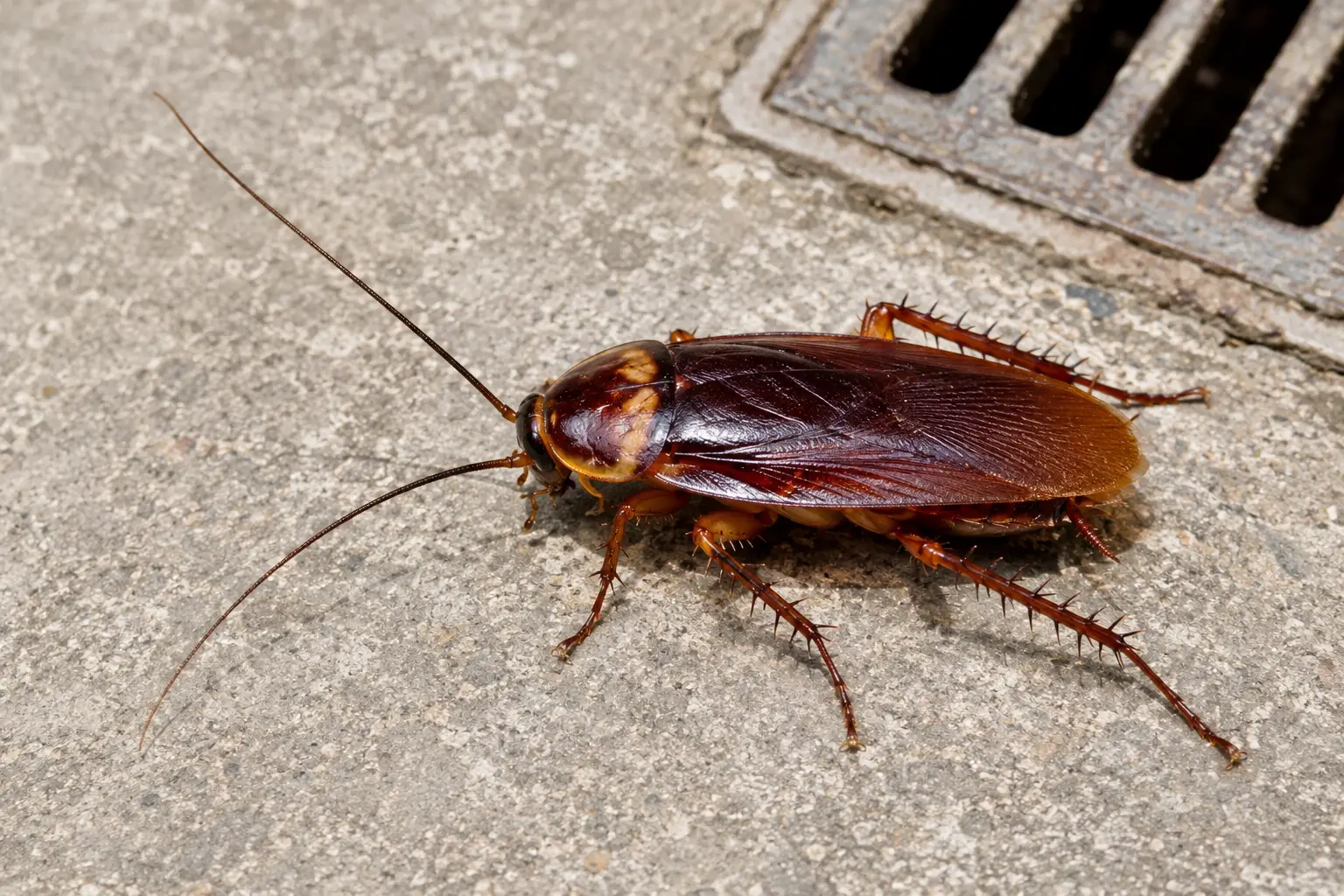
The American Cockroach is the big roach Dubai residents dread — often 4cm or longer, fast-moving, and capable of gliding flight. It lives in dark, damp, warm places: drainage systems, sewers, grease traps, garbage rooms, basements, and service ducts. In Dubai's high-rise buildings, a single shared drainage line or garbage chute can feed roaches into multiple apartments and restaurant units at once. Because they travel through sewers, they pick up and spread dangerous bacteria across kitchen surfaces and food areas. Spraying the ones you see does nothing about the source feeding them in through drains and voids.
Santera's Dubai Municipality-certified technicians treat American Cockroaches at the source — drainage lines, sumps, grease traps, ducts, and harbourage voids — with residual treatments and targeted baiting, then seal and screen entry points to stop the supply. For property managers, facility managers, and F&B operators, we treat building-wide where needed and align all work with HACCP and Dubai Municipality standards, because in shared buildings, unit-by-unit treatment never holds.
Get to know the physical signs and behavioral patterns associated with this species. Knowledge of these specific traits helps in maintaining a secure and pest-free environment.
Santera provides Pest control and prevention across Dubai, with primary service coverage in:

Santera gets rid of American Cockroaches in Dubai with a Dubai Municipality-certified process: our technicians inspect to find the hidden harbourage and entry points, apply targeted treatment that eliminates the problem at its source, and put prevention measures in place so it doesn't come back. For restaurants, hotels, and food businesses, all work follows HACCP protocols and Dubai Municipality standards.
You can try, but DIY rarely solves a American Cockroach problem in Dubai for good. Shop-bought sprays and home remedies tend to deal with what you can see while missing the harbourage and eggs hidden behind equipment and in voids, so the problem returns. Lasting control means targeting the source — which is where professional treatment makes the difference.
Because the source survives. American Cockroach females produce egg cases (oothecae) containing around 14–16 eggs, depositing them in sheltered spots near food and moisture. They are long-lived compared with other roaches, and under Dubai's warm conditions breeding continues year-round, allowing drainage and garbage systems to sustain large, persistent populations. That's exactly why surface sprays and one-off DIY fail — they hit what's visible while the source keeps producing more, so lasting control has to target the source, not just the symptoms.
Watch for American Cockroaches themselves and the signs they leave. American Cockroaches are large, measuring 35–40mm or more, making them one of the biggest roaches in Dubai. American Cockroaches favour warm, moist, dark environments — sewers, drains, basements, grease traps, garbage rooms, and service voids — and move into living spaces through drainage lines, gaps, and ducts. They are nocturnal, fast, and can fly or glide in warm weather. Catching it early, before numbers build, makes treatment far easier.
American Cockroaches don't bite people, but because they travel through drains and sewers they carry bacteria such as salmonella onto food and surfaces, creating a real contamination risk.
American Cockroaches are omnivorous scavengers feeding on decaying organic matter, food waste, grease, starches, and sweets. In Dubai they exploit garbage rooms, grease traps, drains, and food storage areas. They readily feed on sewage-associated material, which is exactly why they transfer harmful bacteria such as salmonella to the surfaces and food they later contaminate. Cut off these food, water, and shelter sources and you remove what draws them in — but an established population still needs targeted treatment to clear fully.